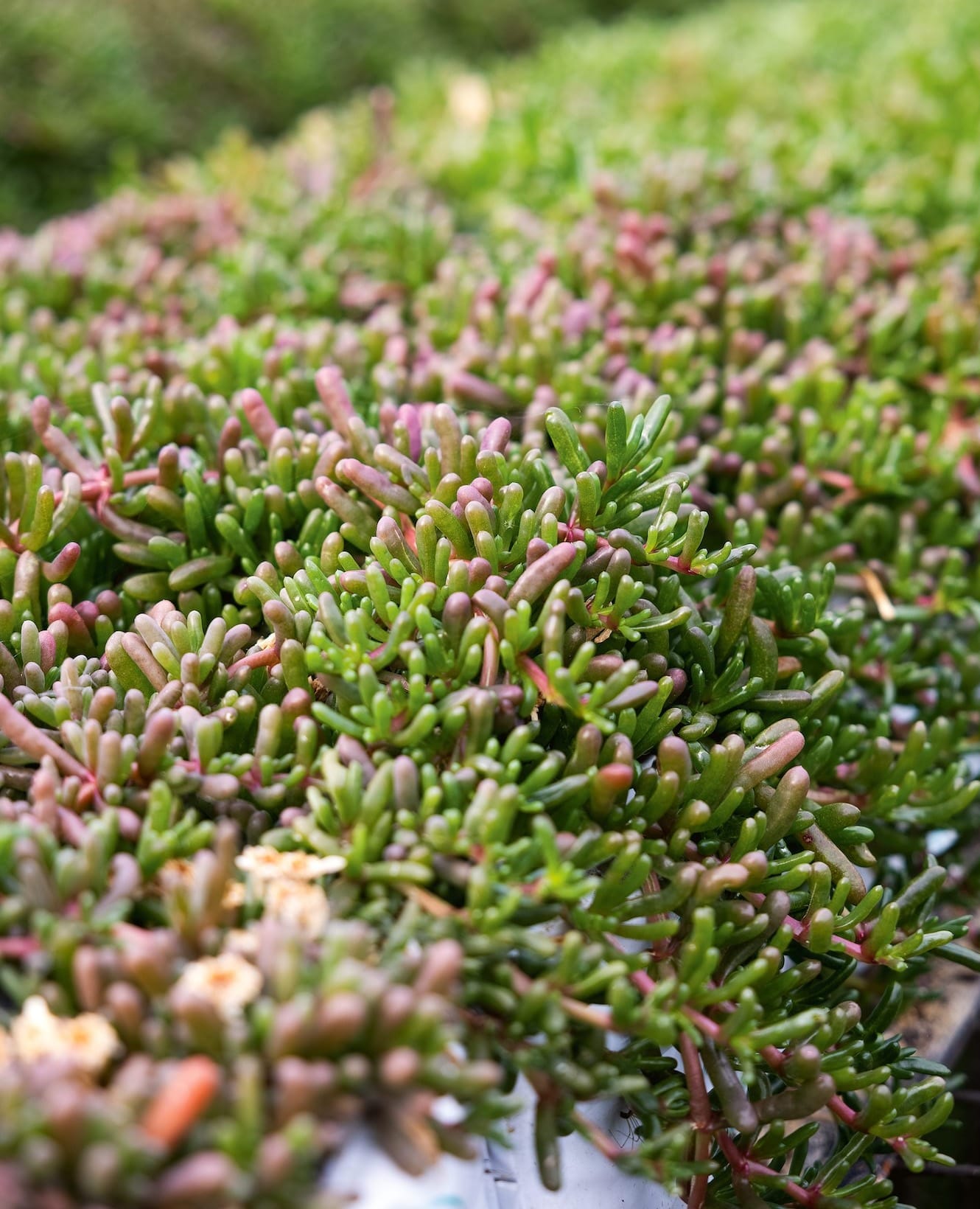

Turning blight into bonus, enterprising farmers have grown a thriving business on Western Australia’s salt-affected land.
Words Alison Bennett Taylor
Photography Bo Wong
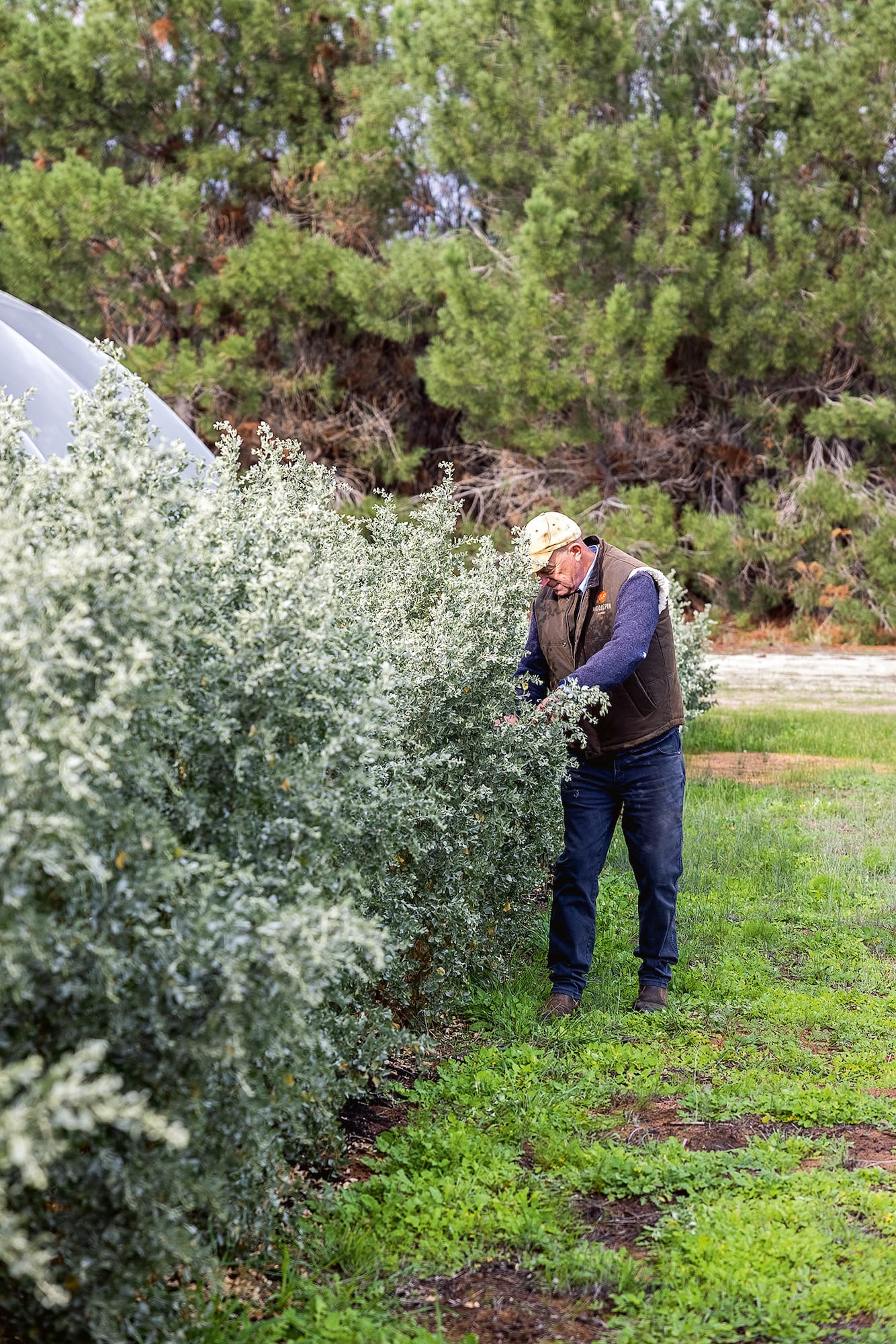
When David Thompson started growing saltbush more than 20 years ago, the sheep had already done the taste-testing for him.
He was browsing a regenerative nursery in the neighbouring Wheatbelt region, looking for a saltbush variety to grow as fodder for his flock, when he got lucky. “They had a call from the farmer next door saying, ‘I’ve got these sheep, and they keep getting into this particular plot’,” he recalls. “I went out there and I picked the leaf, and I said, that’s the one we’ve got to have, because that’s the best tasting saltbush I ever had.”
The variety was called seakiss, and it paved the way 10 years later for a thriving regenerative business whose appeal has jumped species.
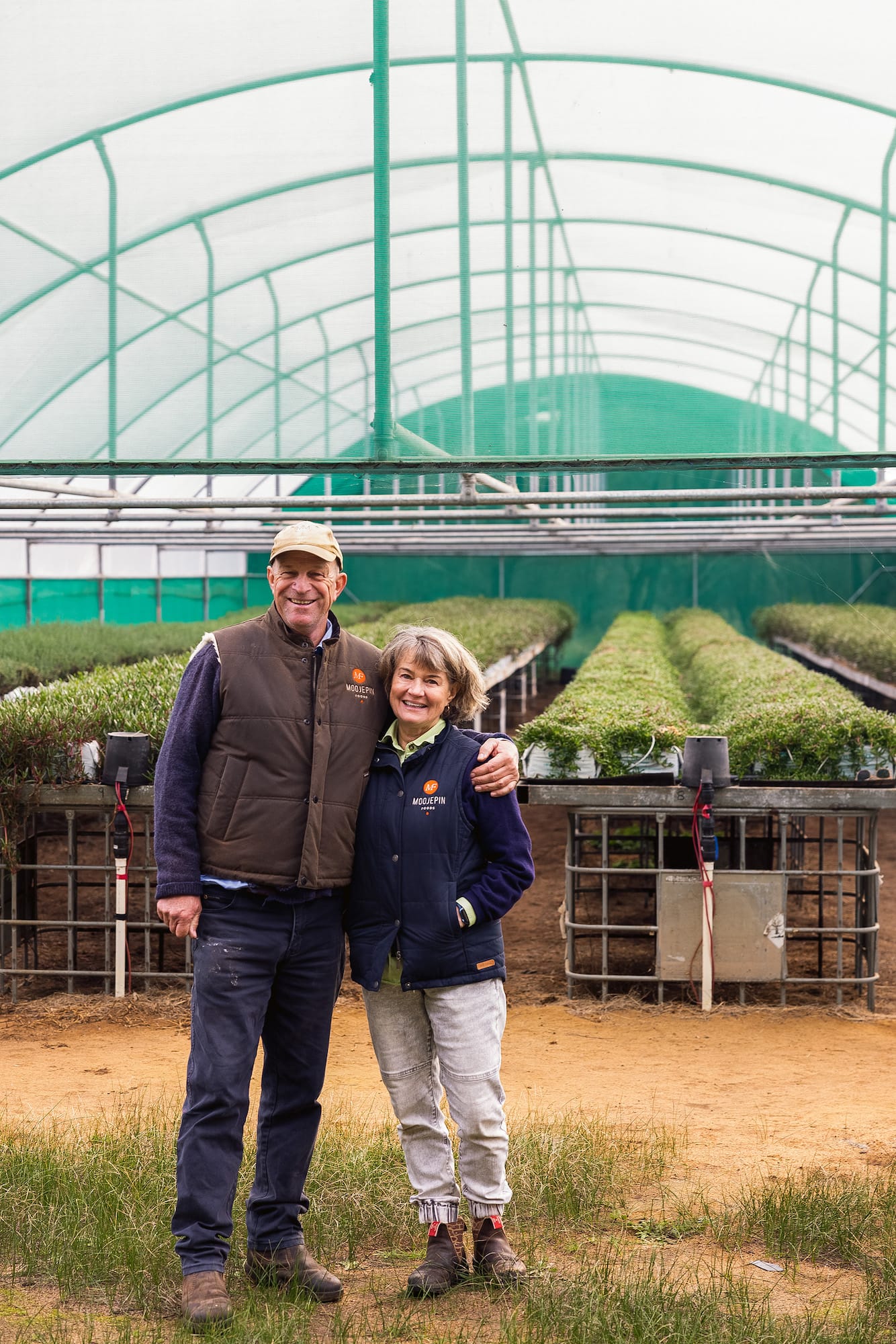
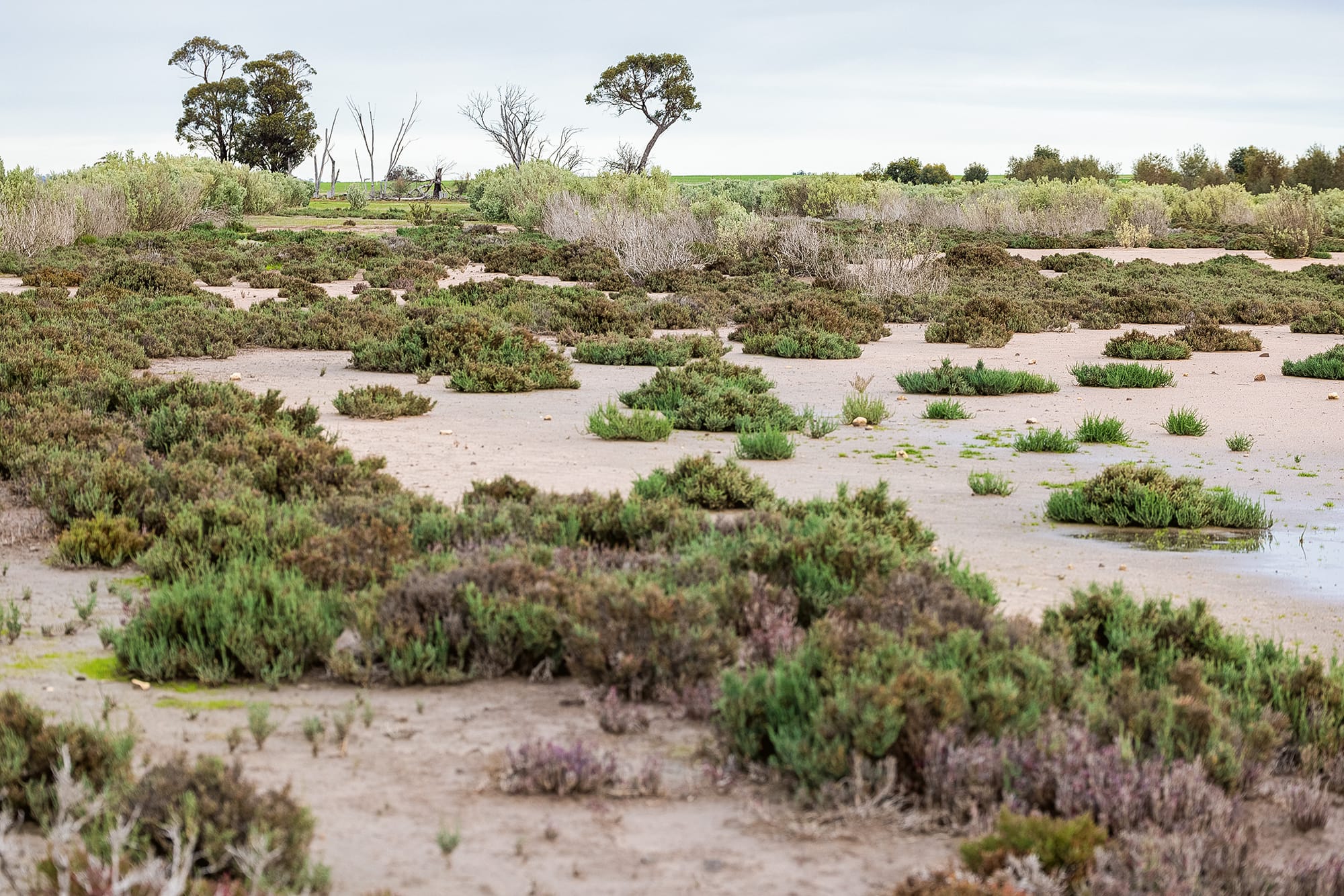
Most of Australia’s saltbush was heavily grazed by the first sheep to wander through the country’s interior, and the remaining plants became bitter in defence. While saltbush is not native to Western Australia’s south, it is one of the few things that will grow when the land turns to salt. Thompson was keenly aware of this as a former president of Katanning Landcare, witnessing the devastating march of dryland salinity across great swathes of farmland and trying to deal with it.
While Thompson’s prize merinos were enjoying their salty feed on his farm in the Great Southern region, the same plants photographed on the farmer’s Instagram account caught the eye of a chef in Perth.
The chef enlisted Lance McLeod to find the farmer and his saltbush. McLeod was running a niche food distribution business at the time, working with chefs to procure hard-to-find products. Born in Zimbabwe, McLeod grew up in Queensland and ran fruit and vegetable shops on the Gold Coast before moving to Western Australia with his family.
“I didn’t even know what saltbush was,” McLeod recalls. “I just started buying some saltbush off [Thompson], and then some samphire. One plant led to two, led to three, led to four.”
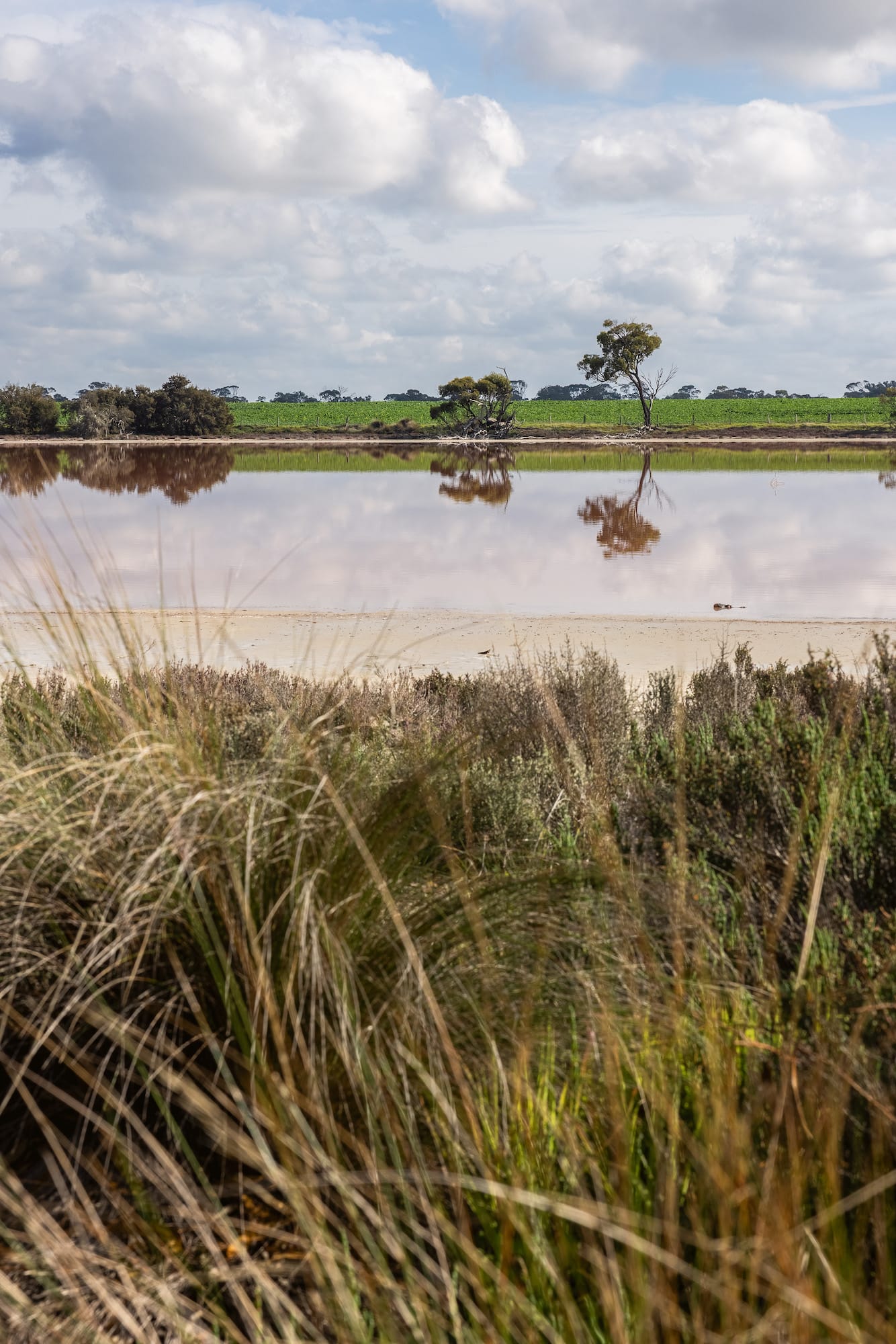
In 2018 McLeod, Thompson and his wife, Sue, established Moojepin Foods, the Noongar word for the mooja bird, from which the farm also takes its name. “It just took off,” says McLeod, “with no real expectation or intentions, apart from, let’s just see where this goes.”
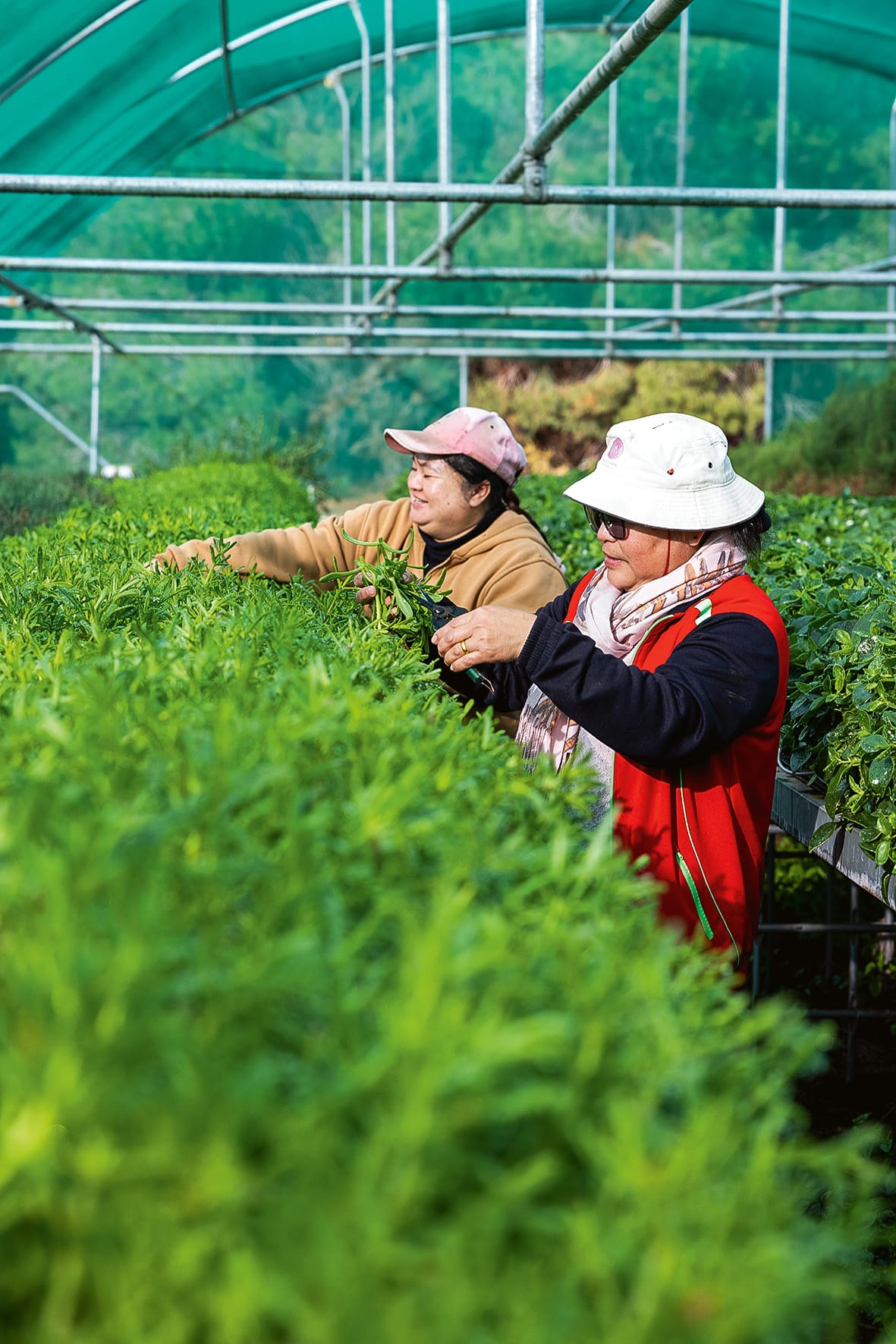
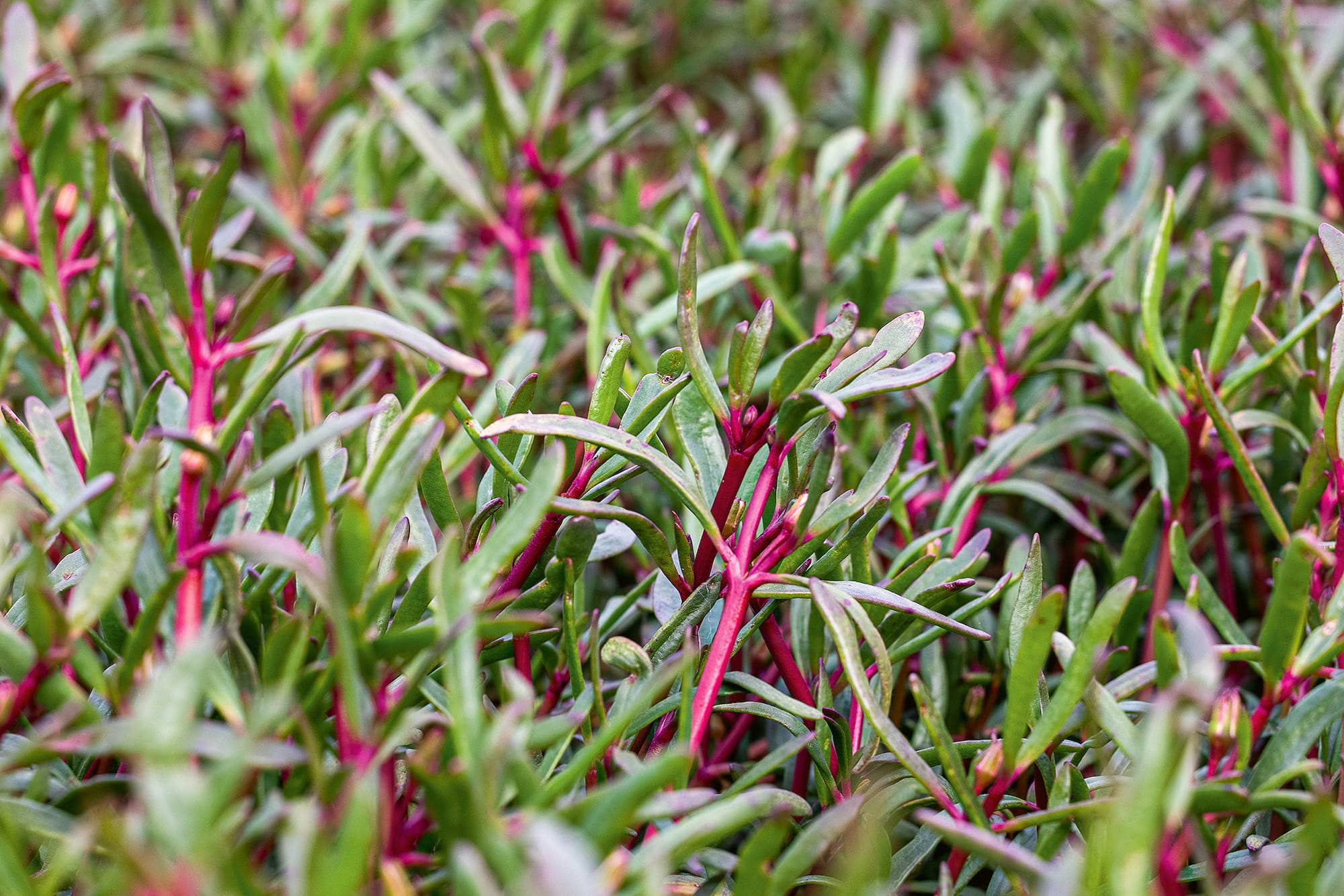
Supplying chefs from Margaret River to Melbourne, Moojepin Foods specialises in growing halophytes: salt-loving plants with a juicy crunch and a satisfying tang. They thrive on Thompson’s salt-affected land and in greenhouses, growing in bags of coconut fibre and in recycled containers.
Some 20,000 hectares of land across Australia is lost to dryland salinity each year and the spread is particularly swift and relentless in Western Australia’s Wheatbelt and Great Southern regions. The land was once open woodland covered in tall wandoo and salmon gums, deep-rooted trees whose taproots would draw up the mineral-salt-enriched groundwater. As plantings of shallow-rooted cereals and grasses spread across the landscape, the water table began to rise, bringing salt with it. Most of the wandoo woodlands were cleared for wheat and sheep farming by the end of the 20th century, but the salt has continued its insidious march, taking out many of the remnant stands of trees.
“It’s just such a slow problem to start and a really hard one to stop,” Thompson laments. “Back in the day when land was cleared, they had the CP block, which [stood for] conditional purchase. They gave out 400 acres at a time, and if you didn’t clear that land, you got no more.
“It wasn’t necessarily the farmers’ fault at the time – it was policy. And we’ve got the oldest soils in the world, with accumulated salts under every acre. So that’s what’s caused the problem.”
About 73,000 hectares of salt-affected land were declared in WA’s first farm census in 1955. By 2022, the figure had reached 1.72 million hectares. “It works out about four-and-a-half square metres a second,” says Thompson. “It’s a bit like a cancer of the soil. It just spreads. When that water table does come up, if you’ve got flat land, it can just wipe out huge areas.” He adds: “I come down to say sorry to the old trees because we killed them.”
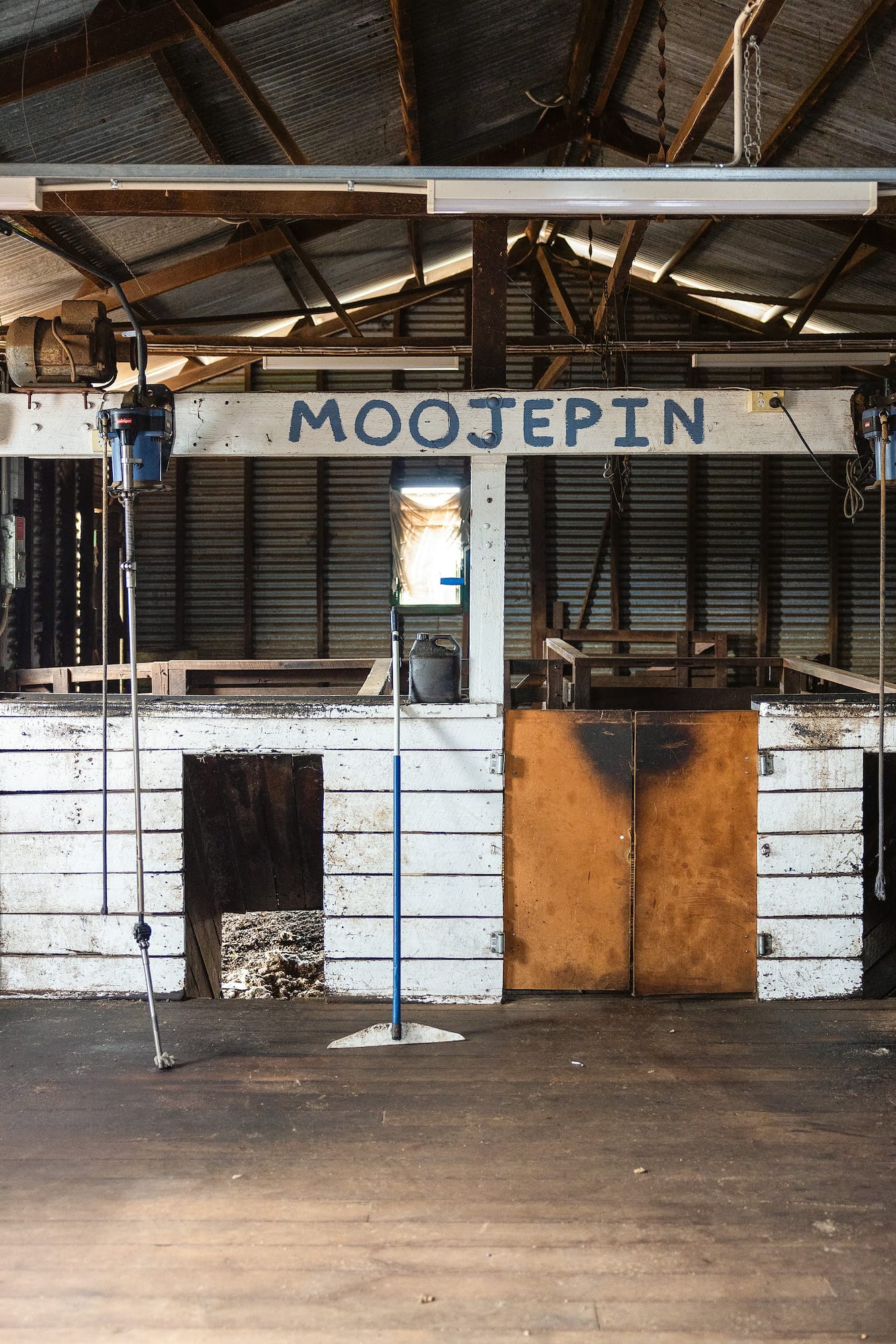
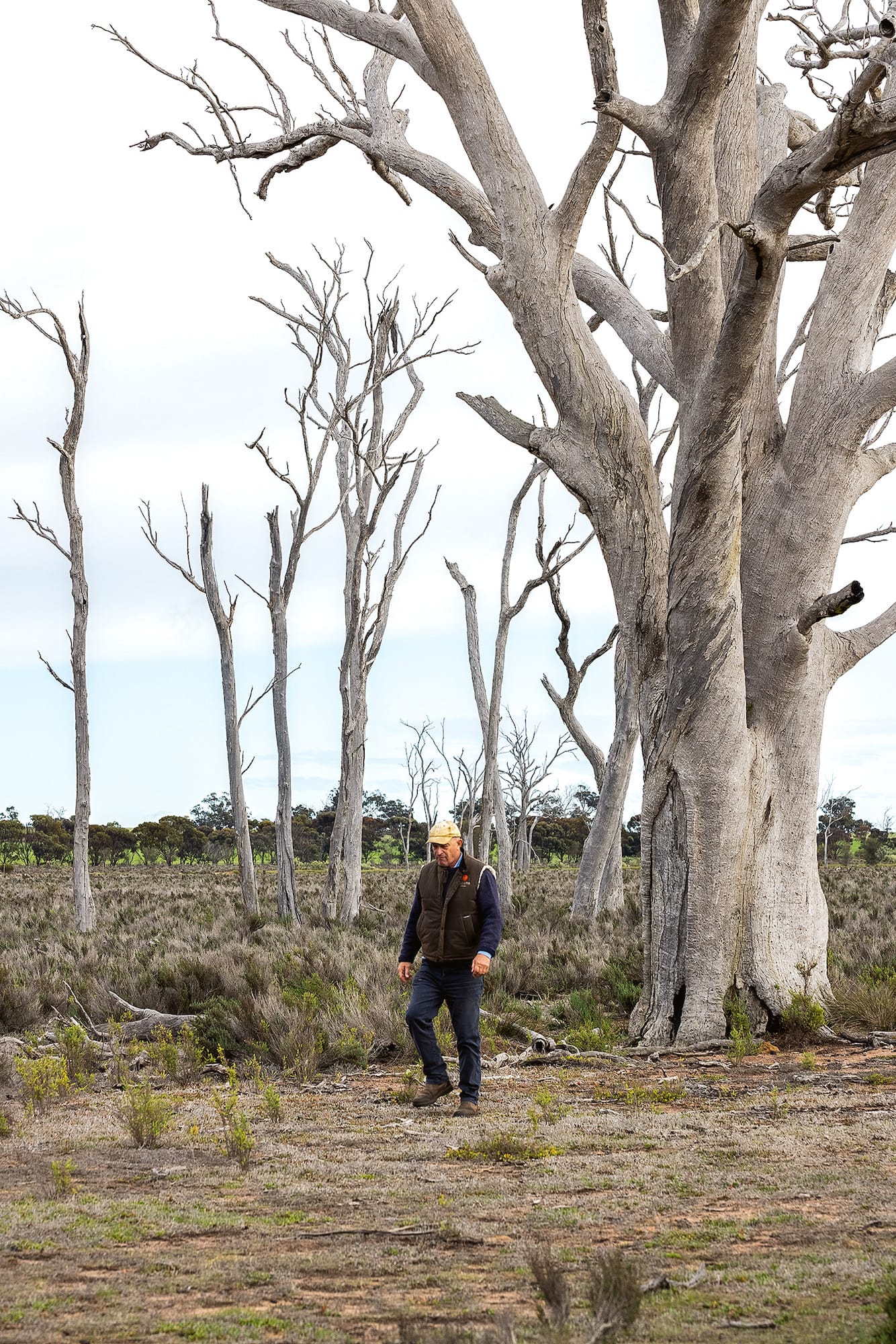
In 1969, as a six-year-old, Thompson migrated with his family from Perthshire in Scotland, settling on a 700-hectare farm at Moojepin, near Katanning. He eventually took over the family farm, moving in 2009 to Coyrecup, north-east of the town, to increase the scale of production. The 3500 hectares of grazing and cropping land there is home to Moojepin Merinos, and sheep remain the mainstay of the business. “We breed and sell rams. We’ve got sheep all around the world now, in Sweden, South Africa and New Zealand.”
The biggest saleyards in the southern hemisphere are just down the road, and Katanning also has an abattoir that has attracted a diverse population of workers including Cocos and Christmas islanders, Fijians, Afghans, Vietnamese and Burmese, making it one of regional Australia’s most diverse communities. Moojepin Foods employs three people from Myanmar, who pick and forage saltbush and samphire from the salt flats and pick and pack hydroponically grown produce from the farm’s greenhouses.
Since landing a grant in 2018 to build two greenhouses irrigated by saline groundwater via a solar pump, the business has expanded its range to include sea blite, sea purslane, karkalla, Warrigal greens and crystal and heartleaf iceplants. Most of the saltbush and samphire are still foraged, but the remainder of the greens are grown hydroponically, with homegrown compost and fertiliser made from wool waste, a process that was developed in Perth. “It is very pungent,” Thompson laughs, “the flies love it.”
Among the challenges has been the singular nature of the business. “Trying to get the fertilising and watering up to speed has been hard because there’s no-one to ask,” says Thompson. “You can’t just find someone to say, how do you do it? Because no-one’s ever done it before. We’ve just sort of mucked along and worked our way through and tried to keep it as simple as we possibly can.”
Thompson and McLeod have plans to start exporting their produce to Hong Kong, and hope to reach the dinner plates of home cooks, too. “The most common question I get when we have people coming is, how do you use it?” Thompson says. “If we had an endless budget, education would be right up there, teaching people how to use it all. Instead of English spinach, use Warrigal greens, instead of asparagus, use samphire.
“My wife Sue makes sourdough bread, and she always uses saltbush flakes as a salt replacement. The karkalla we use in a stir-fry, we just put it at the last minute to add a salty kick.”
Thompson dreams of pumping saline groundwater on a larger scale and using micro desalination plants to provide drinking water for people and livestock, with the brine used to grow halophytes.
“We could actually use these plants to utilise the wastewater,” he enthuses. “That’d be a great thing.”
