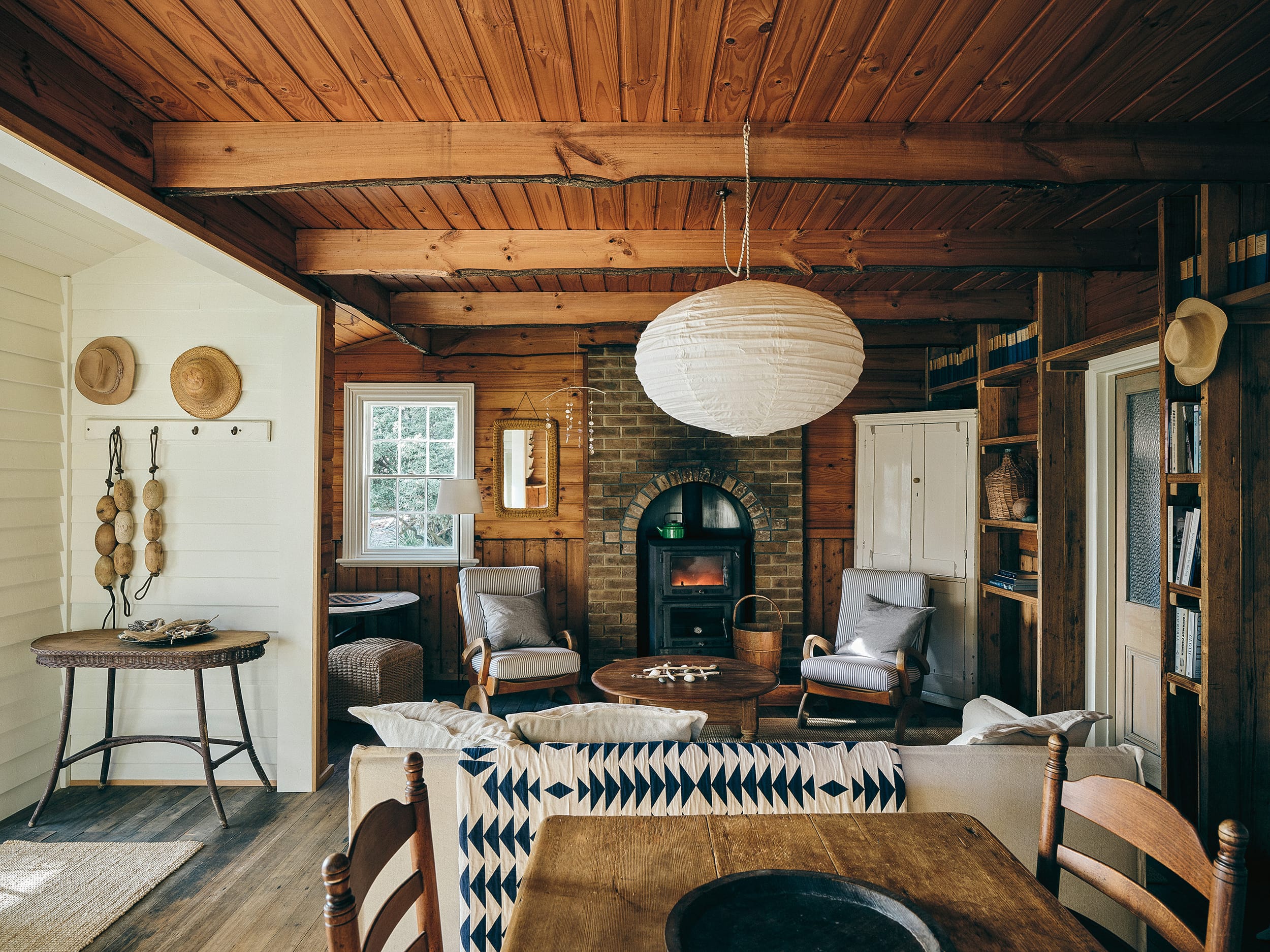
On a far-flung shore of Bruny Island, an interior stylist breathes new life into a century-old beach shack.
Words Amanda Ducker
Photography Lisa Cohen
Tess Newman-Morris remembers a recent Christmas night on Bruny Island, off the south-east coast of Tasmania, when she slipped out in her nightie to kayak alone on glowing water. “I was rowing through bioluminescence,” she says. “The sea was just lighting up as I paddled.”
After spending so much time at her Bruny shack in recent years, Newman-Morris knows bioluminescence sometimes signals ecological disruption, so she’s not in a hurry to repeat the experience. “But at the time, it was amazing,” she says, gazing westward over the bay towards Satellite Island.
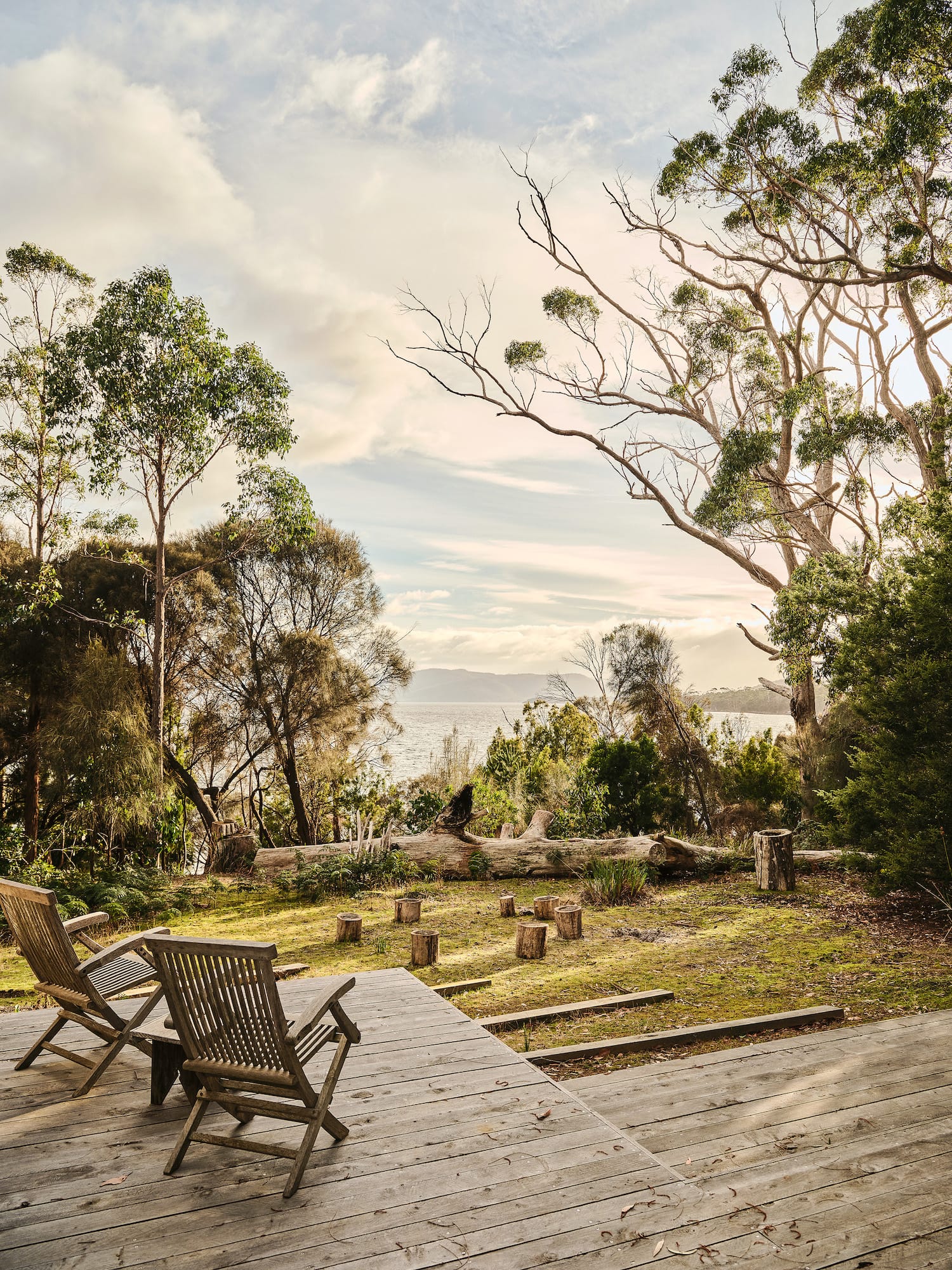
A surprise weekend on Satellite in 2012, organised by her husband, Jack, marked the beginning of a new dimension to their lives. In a way, though, the seed was sown long before then – a longing passed down for a place imagined more than known, half-real, half-mythic.
“My mum always said that she wanted to live on Bruny Island,” Newman-Morris says. “She’d never been here. We’d never been here. She had read about it. And she just longed for what it represented.”
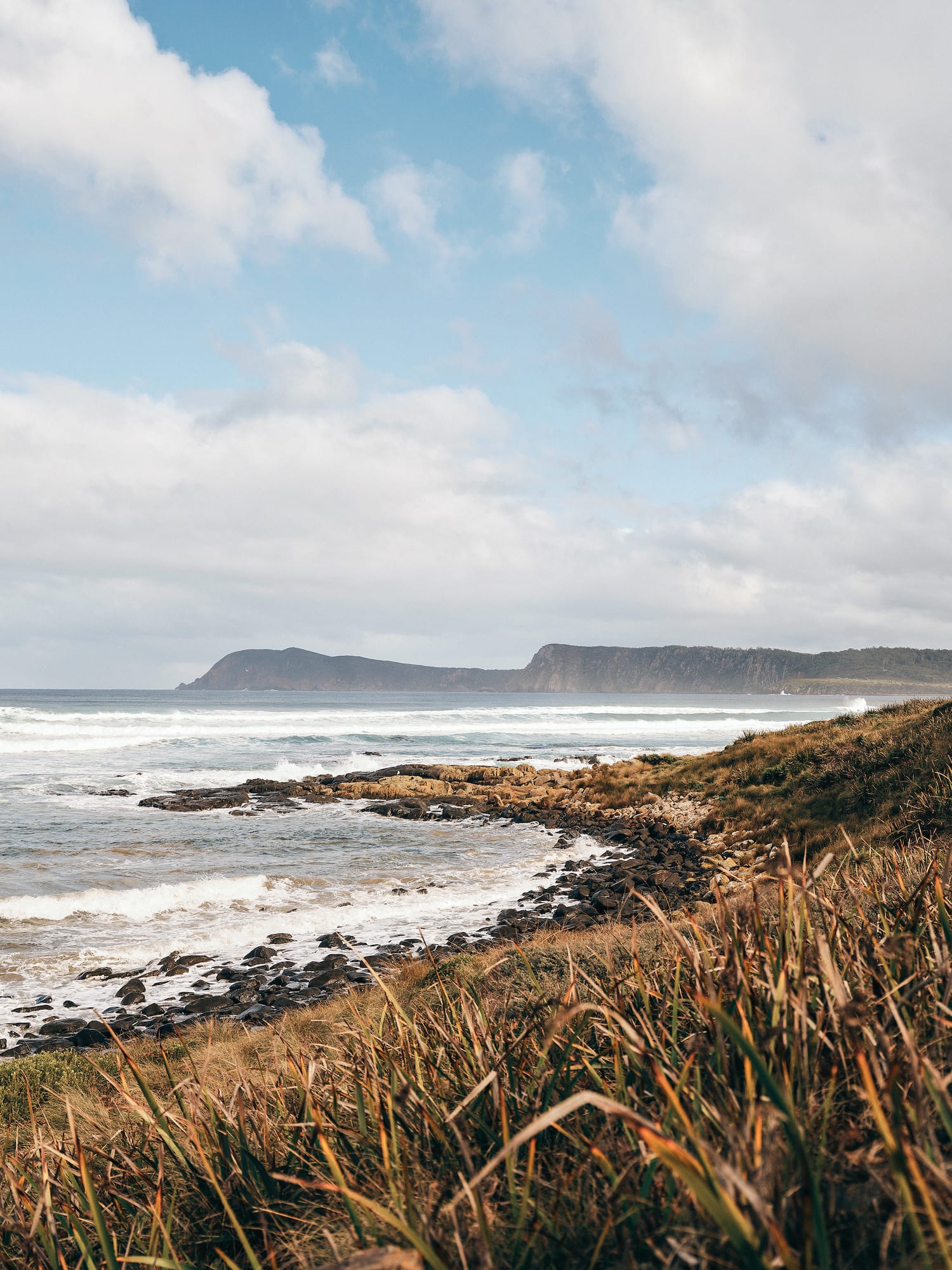
Today, the highlight of the Newman-Morris family calendar is the seven weeks over summer they spend at Fairweather, their holiday shack at Little Taylors Bay in the island’s south.
The humble 120-year-old weatherboard cottage sits firmly in the Tassie shack tradition, in which families build and share basic accommodation in idyllic beach locations. An early owner was the founder of the Tasmanian Field Naturalists’ Club, a Dr E Alfred Elliott, who named the property Broadwater in the 1920s, and hosted annual Easter camps for walking parties. Just as it became the second and beloved home of his children, so it is today for Poppy Newman-Morris, aged nine, and her little brother Freddie, five.
The family travels back and forth from their home in regional Victoria, where Newman-Morris works as an interior stylist and decorator with a mostly Melbourne clientele, and Jack as an agroecological coach.
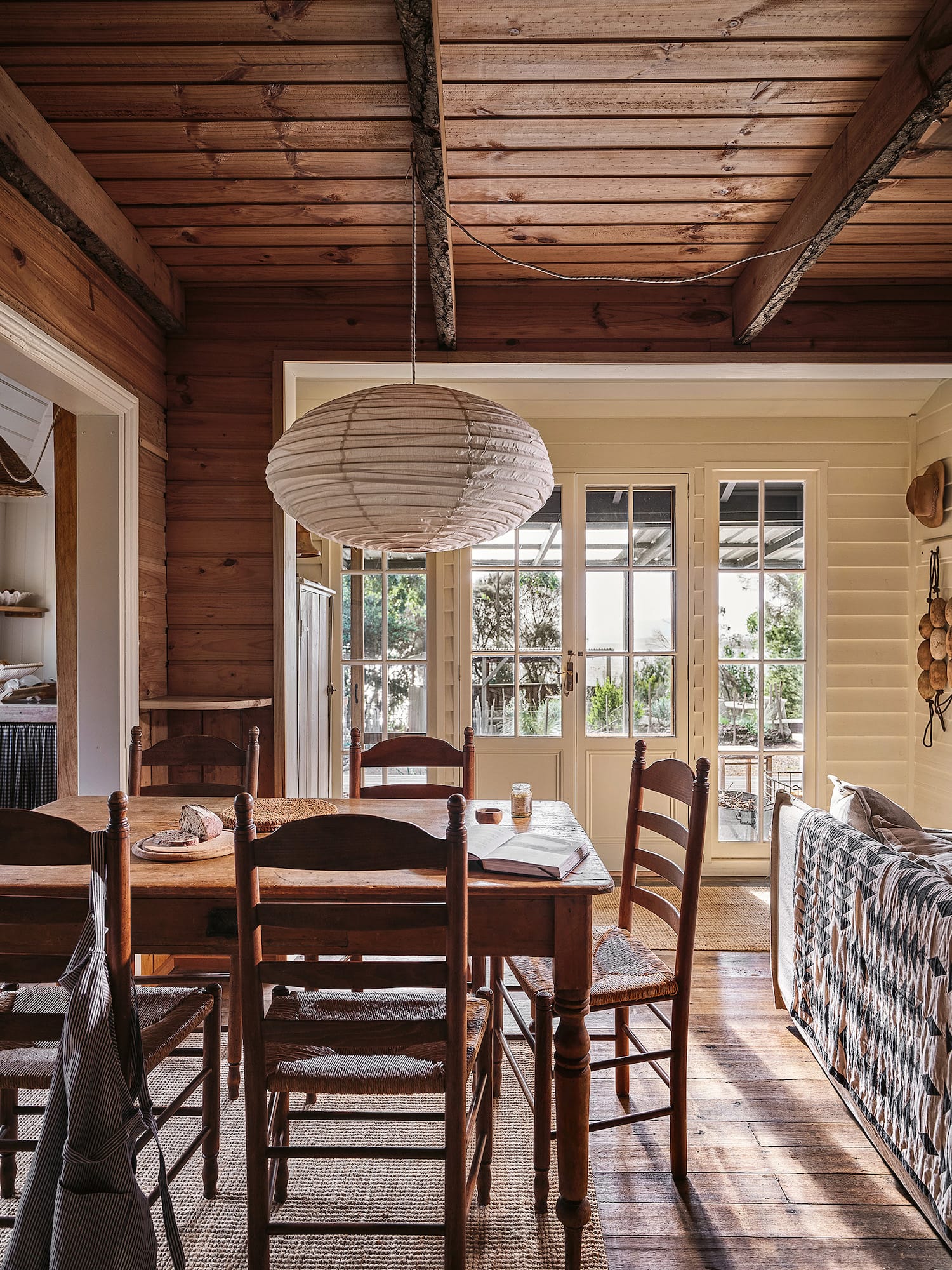
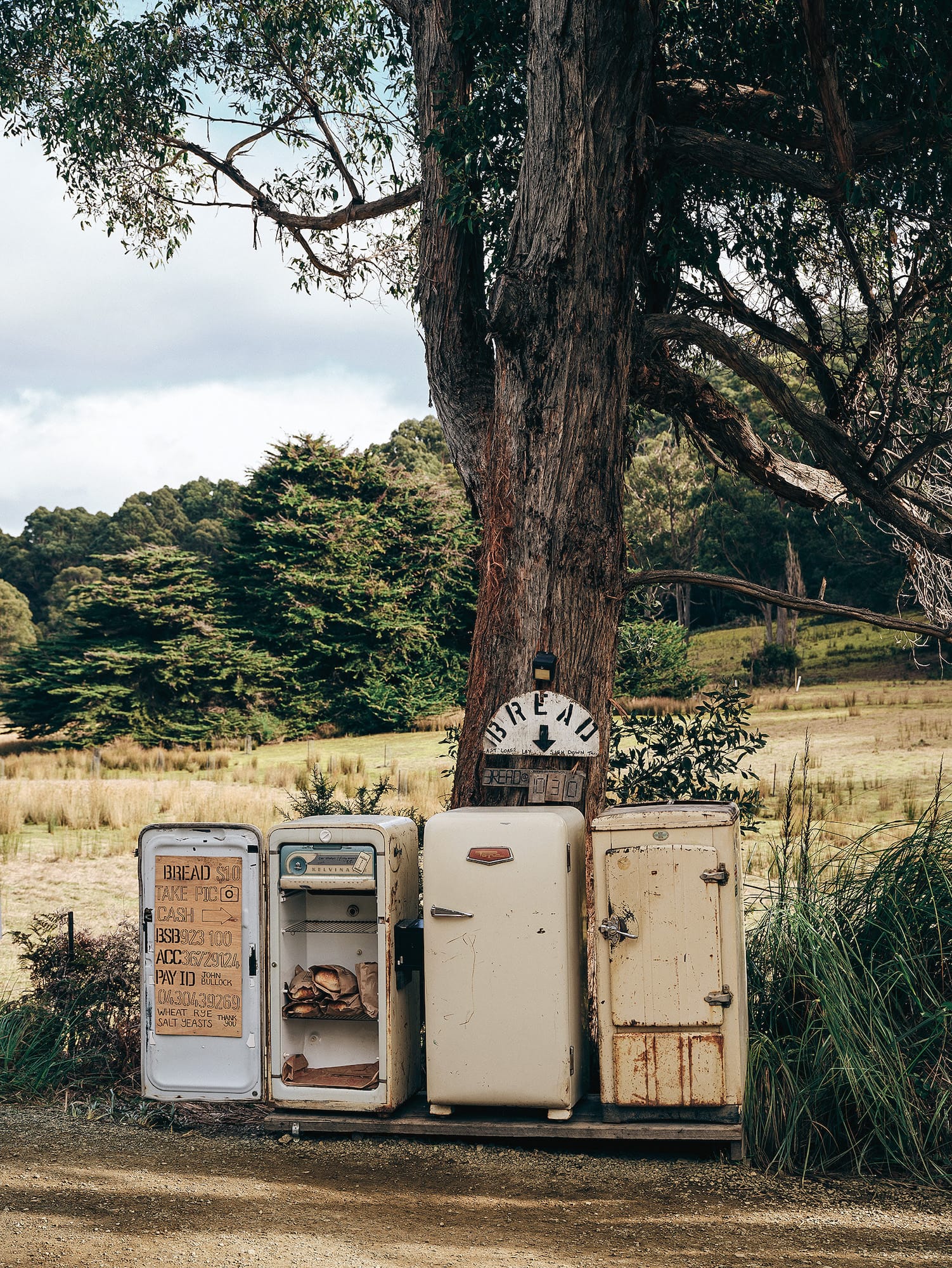
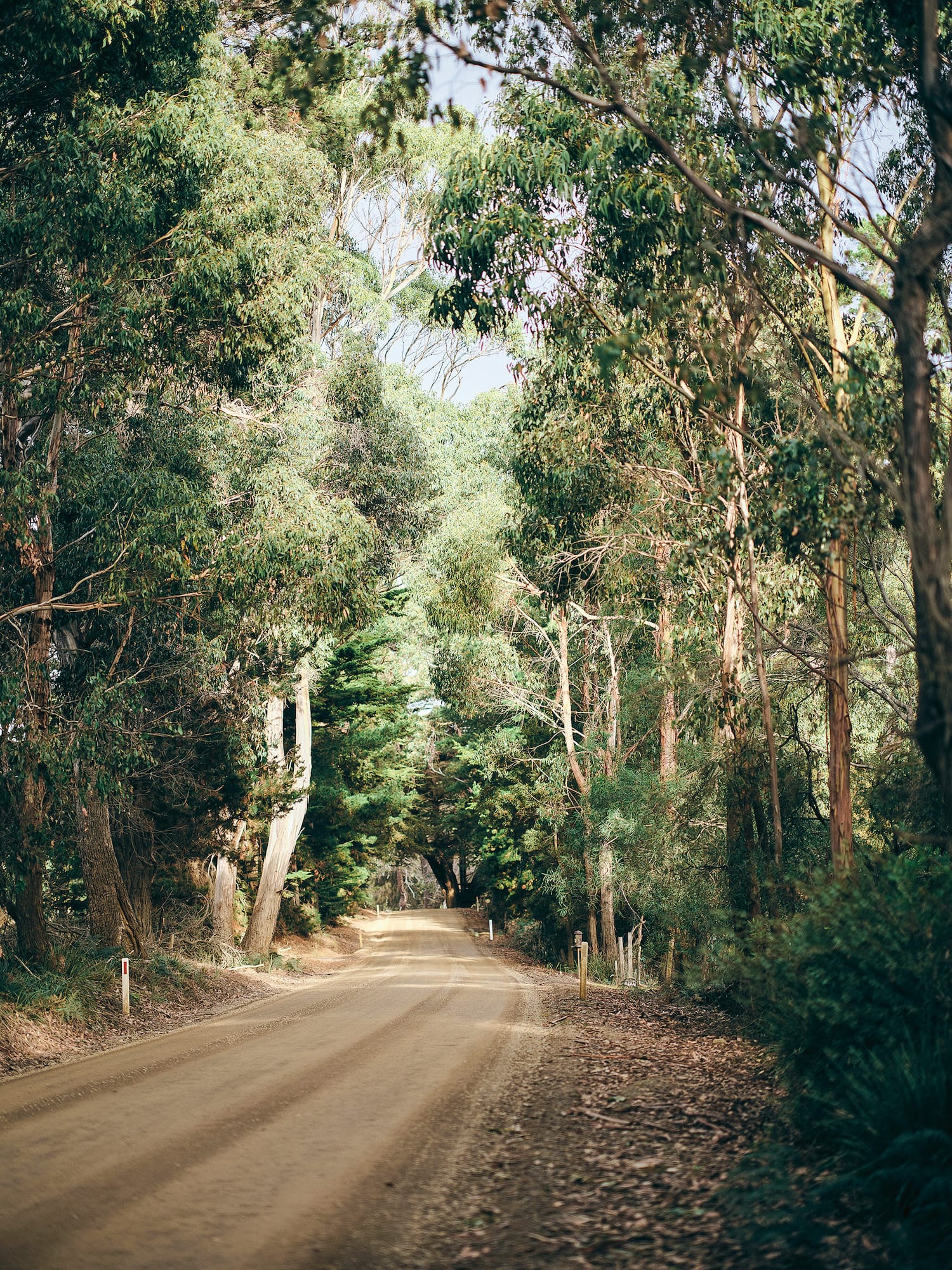
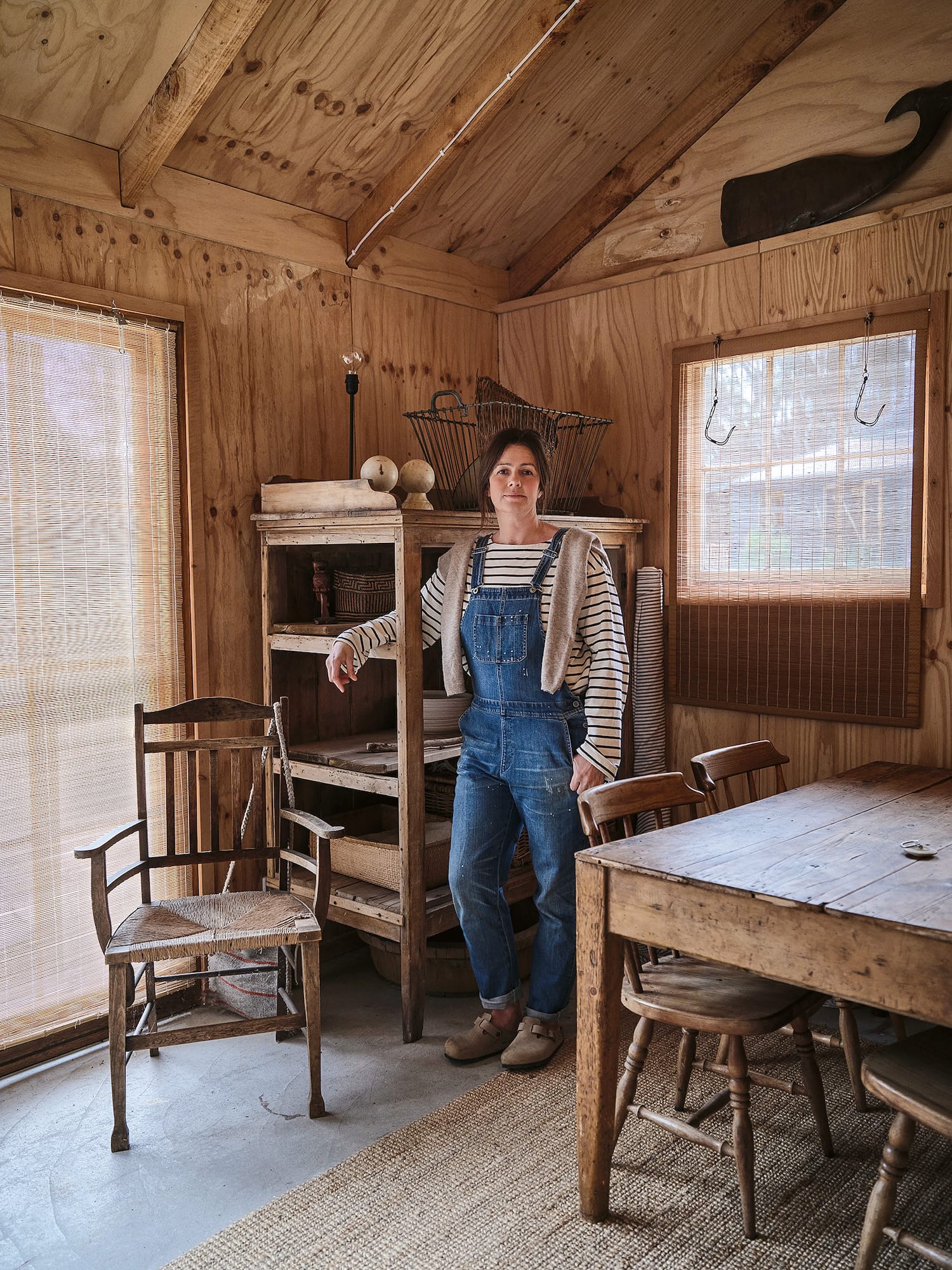
The cottage has been stripped back and restored to a calm and simple aesthetic; the Bruny Baker’s roadside sourdough stall; Tess Newman-Morris in the studio; the road to Fairweather. Photography by Lisa Cohen.
It’s a mission to get to Fairweather. From their Macedon Ranges home, the family drives to Geelong to embark on the Spirit of Tasmania ferry for a 12-hour overnight Bass Strait crossing. “My daughter has her last day of school and we’re usually on the boat that night,” Newman-Morris says. “Packing our life for the summer feels like something from a previous generation, or an Alison Lester storybook. Getting on the boat feels like a giant exhale.”
Arriving at dawn at Devonport in Tasmania’s north, they drive three hours south to Hobart. After stocking up on provisions, they head another half-hour’s drive south to Kettering and catch a small car ferry across the D’Entrecasteaux Channel, a 20-minute ride on which their excitement builds. The final leg is a 45-minute drive south through farm and bushland, an isthmus called The Neck and, at last, a meander down the coastline. There’s just one more stop – at a couple of vintage refrigerators filled with fresh sourdough loaves, set up as a roadside stall by the Bruny Baker. Sometimes Newman-Morris keeps butter at hand to slather on their favourite sultana loaf for the final stretch to Fairweather.
Summer unfolds on island time. “There’s a feeling of being removed from the busy world out there, crossing the sea towards a refuge,” Newman-Morris says. “Shack life is so appealing, I believe, as we all yearn for a slower and simpler way of living.”
While day-trippers tick off the usual highlights – climbing the lookout at The Neck, indulging in Bruny Island Cheese and Get Shucked oysters, visiting the Cape Bruny Lighthouse and swimming at Adventure Bay – the family tends to stay close to home. “There’s always that little juggle of what are we going to do today? Are we going to work on jobs about the place, or are we going fishing or down to the lagoon? Or will we wait and take hot chocolate to the lighthouse once the tourists have gone?”
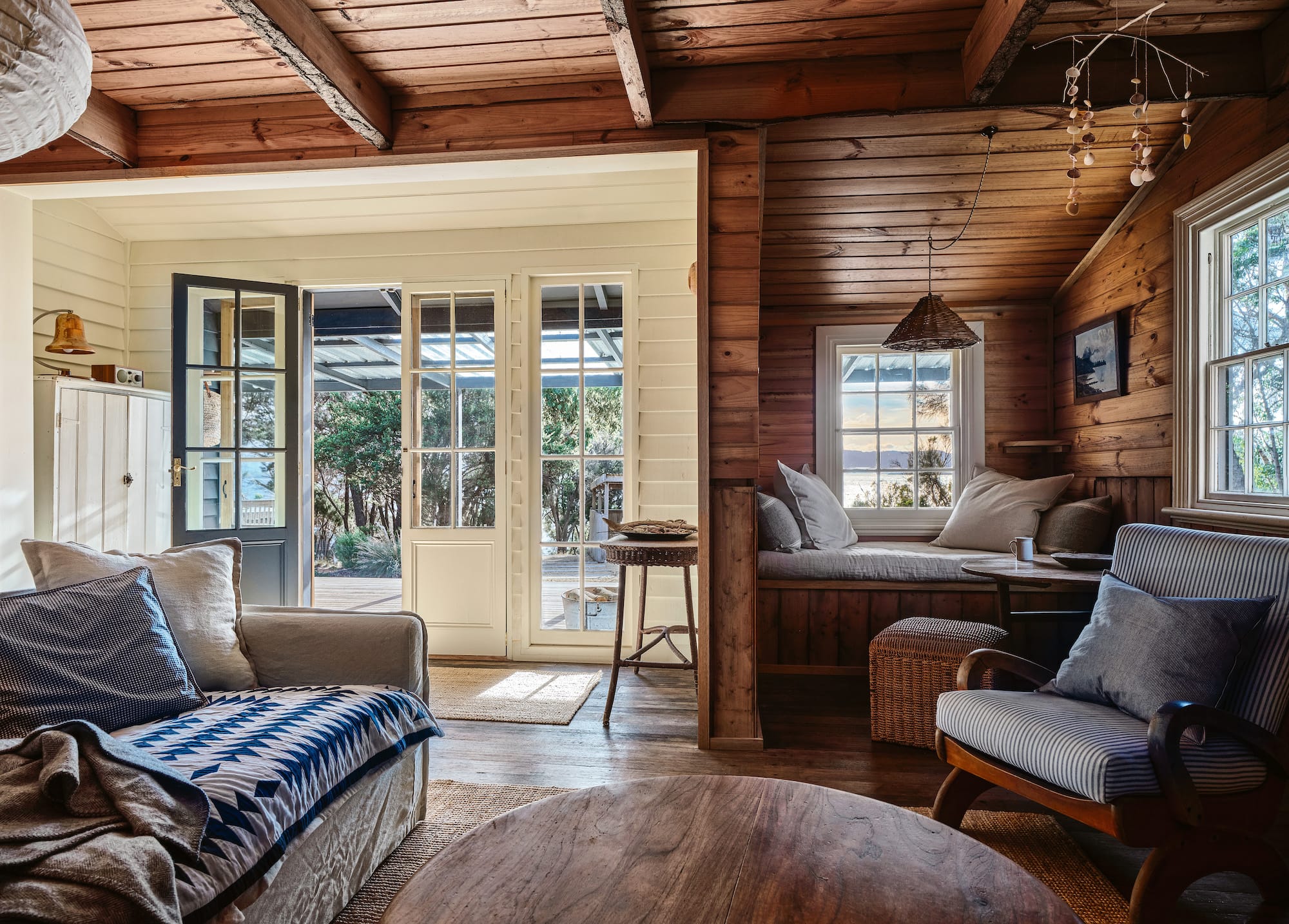
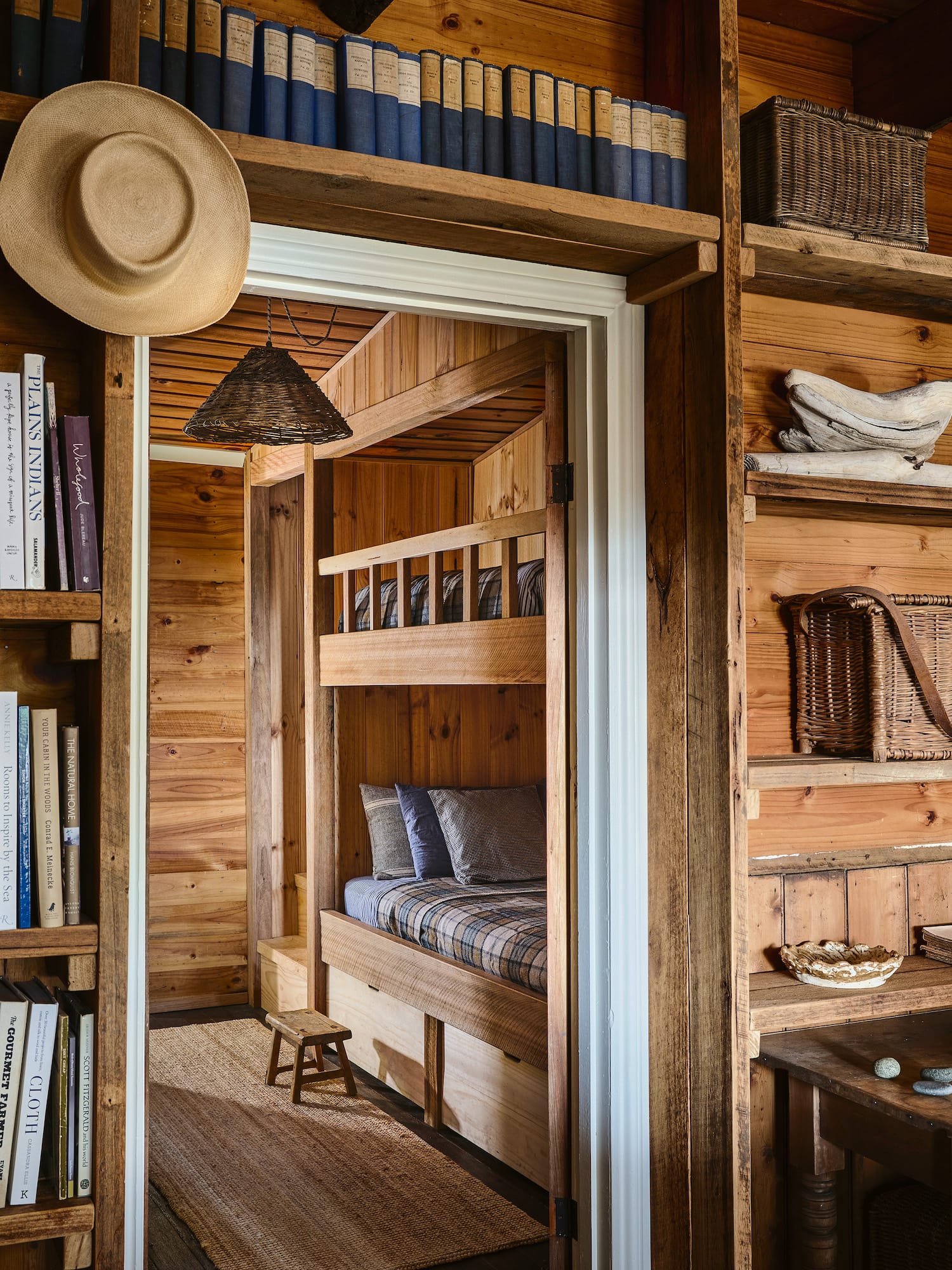
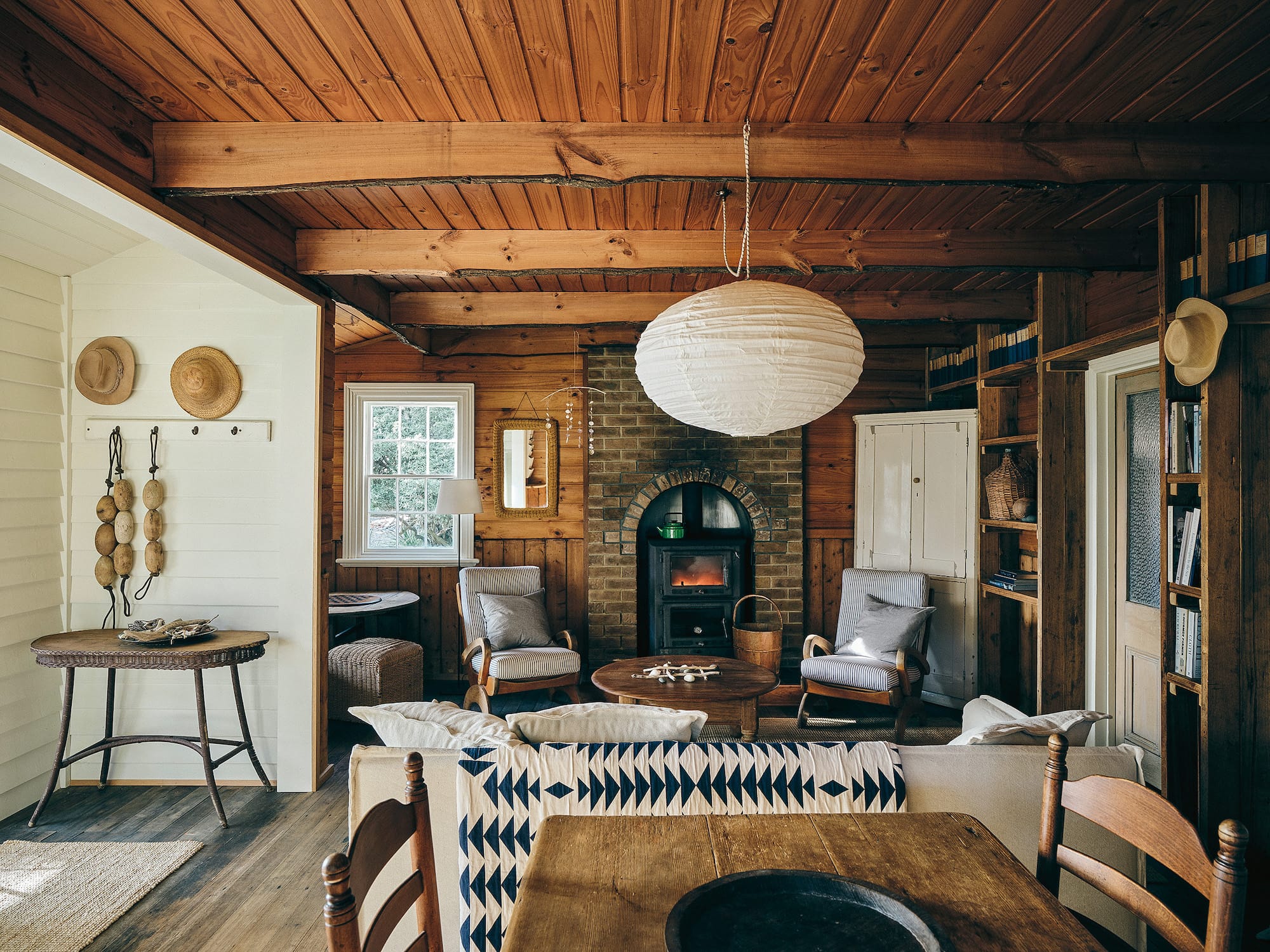
Returning to the three-bedroom, wood-heated cottage, even after a few hours out, is always a pleasure. “Fairweather doesn’t tell you how to feel, but provides you with the space and peace to discover it,” Newman-Morris says. “The shack is real, the floors are creaky on their sandy foundations, the sash windows tend to wriggle, but I’m learning these are not flaws. They’re part of her charm.”
She and Jack have spent the past six years renovating, staying within the footprint. The rooms are pared back but warm, featuring salvaged timber, natural fibres, soft light. “It’s always evolving. I like that it’s a bit rough around the edges – I don’t want it to feel overworked.”
Inevitably, though, it’s a highly considered space – Newman-Morris is a stylist, after all. Before she developed a deep feeling for the place, she expected the styling to be more playful and lean more towards a retro shack vernacular. “I thought it would be way more propped and I had lots of things in waiting. I was thinking weathervanes, copper whales and surfboards. But she has spoken to me differently.
“I come here and I just want less. I edit every single time. The last thing to go from view were the collections of sea-glass Freddie finds for himself and the old china he finds for me. I had them all in a basket at the door, and I love them and they are meaningful, but I’ve put them away. It’s visual editing, really, not getting rid of things. I just need to not see a lot.”
When they bought the place in 2018, the interior was a bit hectic with brown patterned carpets, a Laminex kitchen with a swirly blue lino floor, tiny windows and beer bottles insulating the walls. “A true shack,” Newman-Morris says, “with some water tanks, a tiny shed, a few hydrangeas and a few rogue plants.”
The renovation was logistically demanding, with most of the recycled timber materials, including doors, windows and flooring, brought from Victoria after Newman-Morris struggled to find suitable secondhand supplies locally. “I remember one of those first trips with Jack, his parents and me, packing two cars and one trailer with one child and everything from the timber and antique tables and chairs to life buoys and ticking cushions. We packed it so tightly and so high it was custom Tetris.”
To finally arrive and unfurl on the island off the island off the island, as the locals like to say, was joyous. “It was a great feeling to let it all sort of spill out and slowly start the transformation. I remember, a bit later, being five or six months pregnant with Freddie and hopping over waist-high joists in overalls with a nail gun, just feeling like we’d won the lottery.”
Amid the joy was sorrow. Newman-Morris’s beloved mother, Carol Traies, did get to live her Bruny dream, but only briefly. “We knew she wouldn’t have a long time, but us coming down was a good push for her to say, ‘Maybe now is the time to try this’,” Newman-Morris says. Buying a house at nearby Simpsons Bay, Traies spent nine precious months deeply involved with the family at Fairweather before succumbing to breast cancer. She died in January 2020, two weeks before Freddie was born.
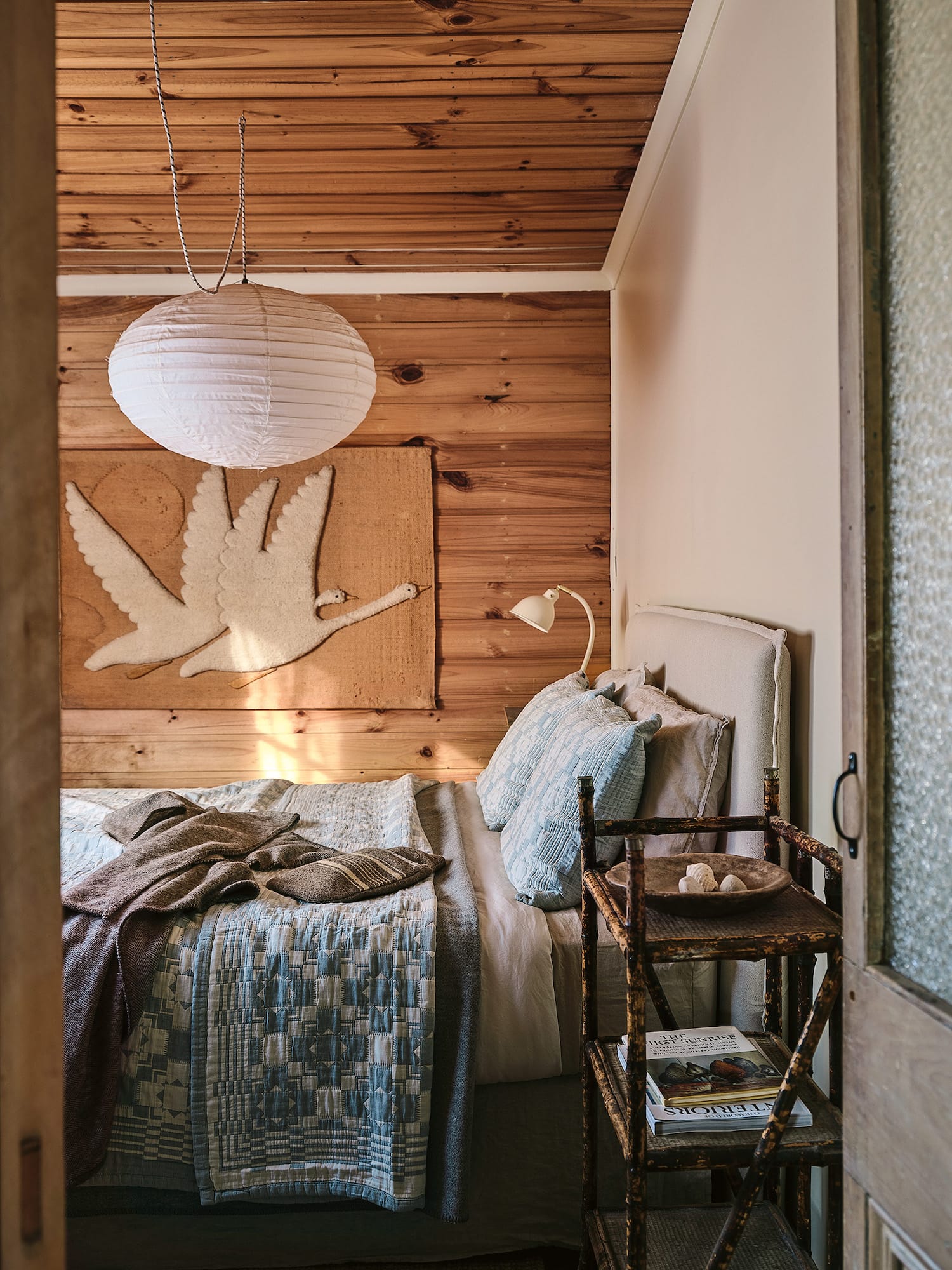
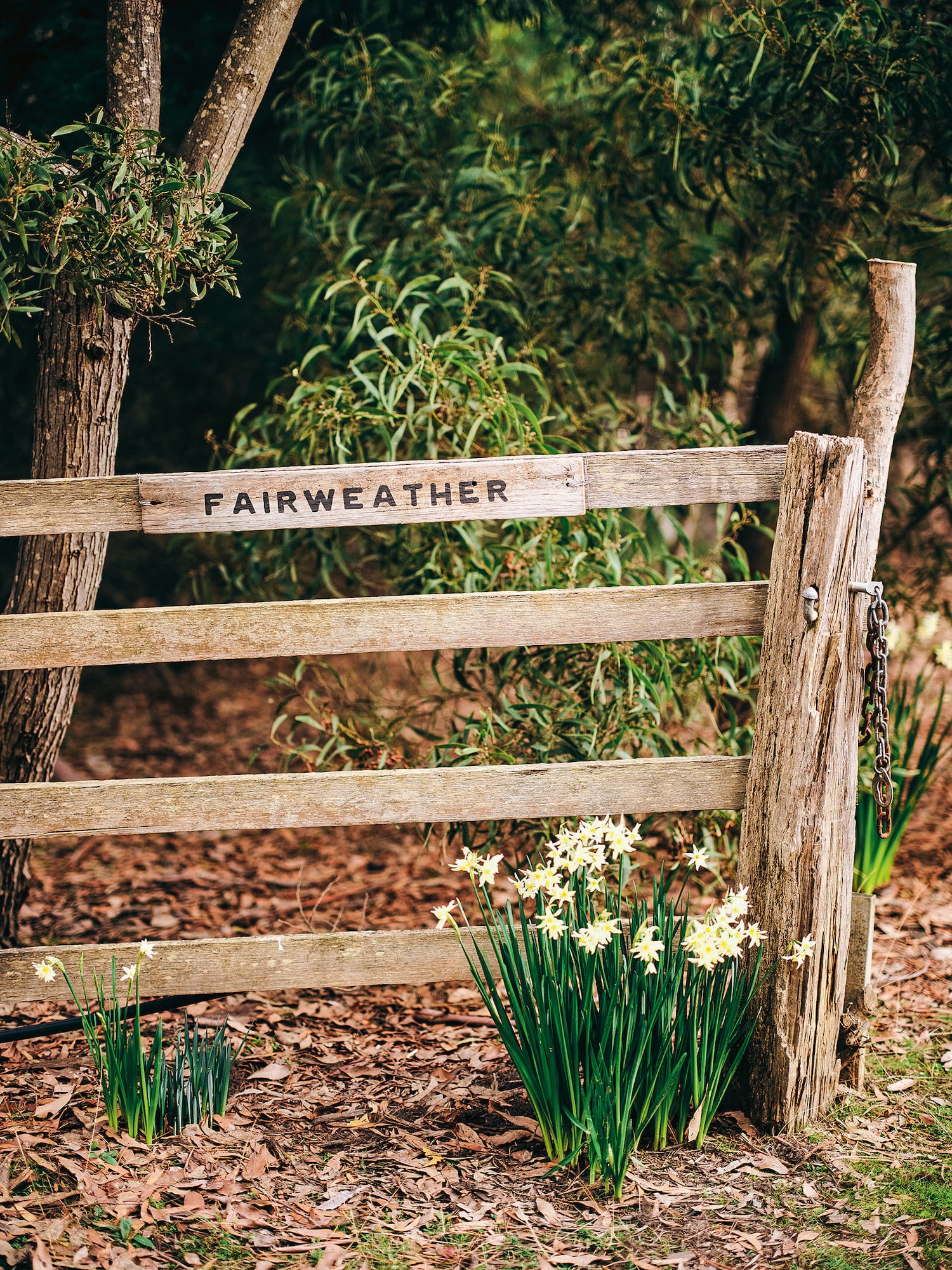
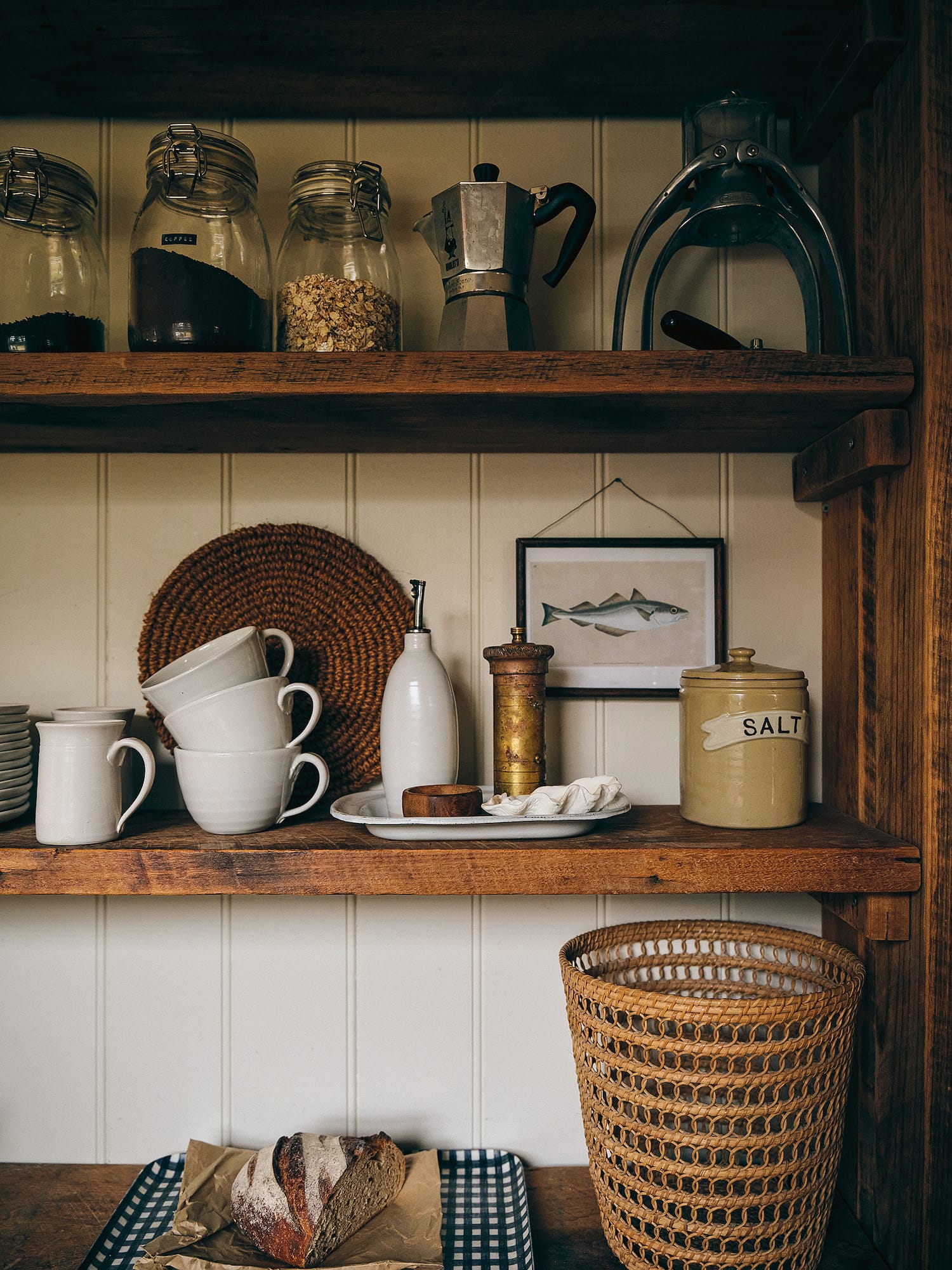
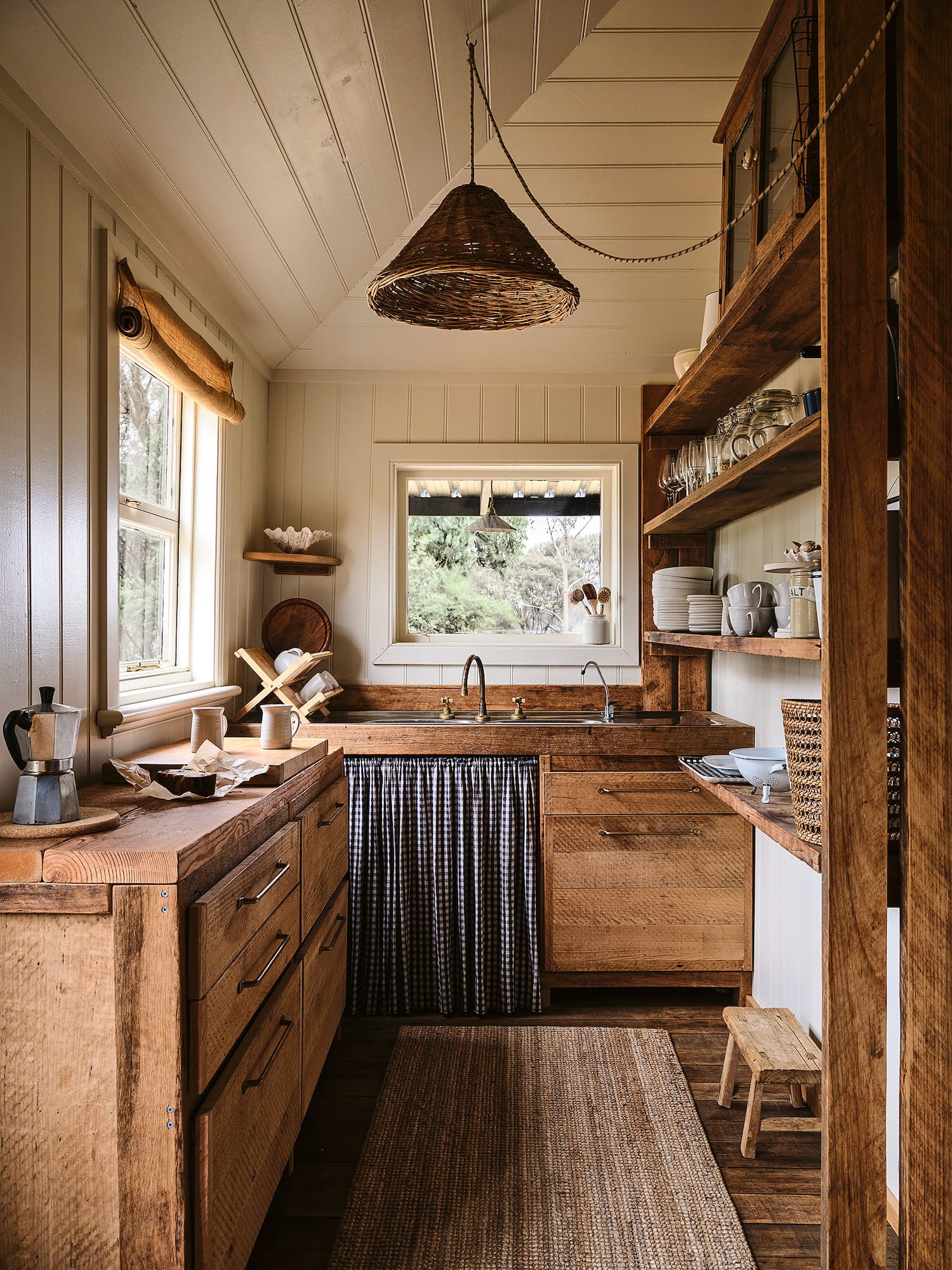
The main bedroom at Fairweather; spring bulbs; the handcrafted, solid timber kitchen; Newman-Morris finds herself “editing” on every visit – “I just need to not see a lot.” Photography by Lisa Cohen.
As well as coming for summer, the family returns for the Easter and spring school holidays. Now that Freddie is a bit older, Newman-Morris is able to spend a week alone each term at Fairweather. She never brings her laptop, but sometimes she does a bit of work with Kate Alstergren, the owner of Satellite Island, where it all began with that surprise weekend away with Jack in 2012.
“We were the first paying guests when Kate opened online bookings for her accommodation,” Newman-Morris says. “When we got home I messaged her and said, ‘You have something rather special over there. Shall we make it pretty together?’ And we just started working together and became friends. It’s my dream kind of job, really, to tinker with a place, over time.”
By the time the couple married in front of 65 guests on the Satellite Island jetty in 2015, the pull of the local waterways and ancient landscapes was deepening. These days, Newman-Morris carries a small bell from her mother’s Simpsons Bay home whenever she travels to Fairweather – its quiet tinkling a reminder of all she holds dear.
Fairweather opened recently to guests, via Airbnb.
