There are crocs in the water and ABBA on the dance floor when Annabelle Hickson cruises the Kimberley with her best friend. Between the bridge and the buffet, she writes home to her teenage daughter.
Words Annabelle Hickson
Photography Annabelle Hickson and Alexandre Fellous
YOU know how massive emu eggs are? Well, a female emu lays between five and 15 of these huge eggs in one go. And then she wanders off somewhere – presumably for a rest – while the dad emu takes over. He sits on the eggs for eight weeks straight without food or water, the mother nowhere in sight.
I feel a bit like that emu mum out on this cruise ship, bobbing gently somewhere off the Kimberley coast while Dad keeps the home fires burning. Except Dad is not doing without food and water. So I’m not feeling guilty, but I am missing you.
We got talking about emus last night when a scientist on the ship gave a talk about Indigenous astronomy, and pointed out the Dark Emu up in the sky. It’s not the stars in the constellation that make the emu shape, but rather the dark space between them, where the Milky Way gives way to black space. I’ll show you when I’m back home.
~
There are about 200 guests on this Ponant ship (and almost the same number of staff), which might sound like a lot but it’s nothing compared to those huge cruise ships with 5000 guests and thousands of crew plus casinos, nightclubs and pools. You should google “mega cruise ships” to get a visual. It’s intense.
This ship is not intense. While it’s large compared to our tinnie, it’s small and elegant by cruise standards. It’s like a fancy hotel at sea, with excellent food, plush beds and a piano bar at the top. There’s even a doctor with an X-ray machine onboard. But the ship is still small enough to navigate the shallow waters of the Kimberley coastline, off north-west Australia. The massive tidal changes out here mean you can see an exposed reef sitting above the waterline in the morning, only to have it covered by 10 metres of water by the afternoon.
~
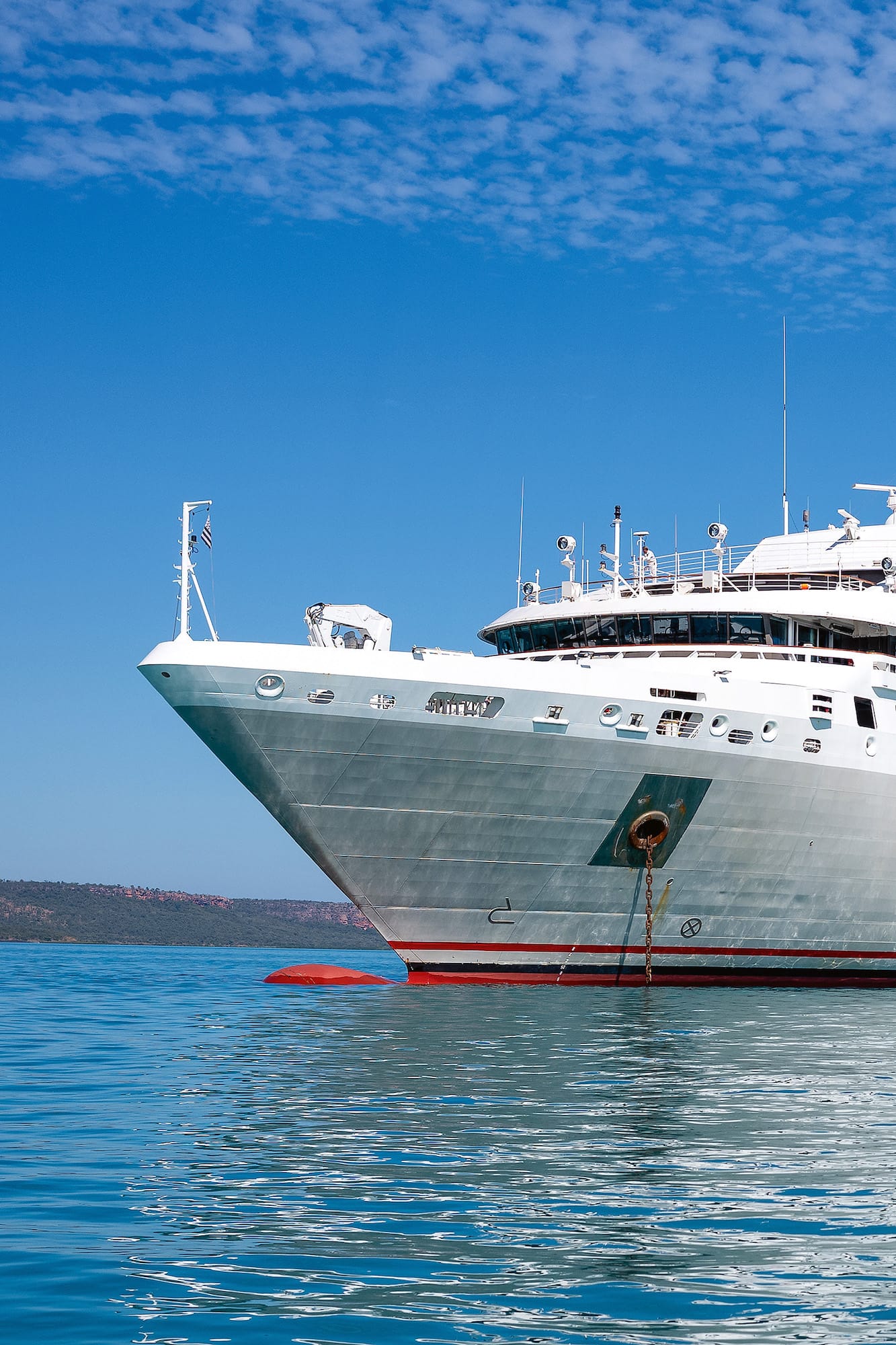
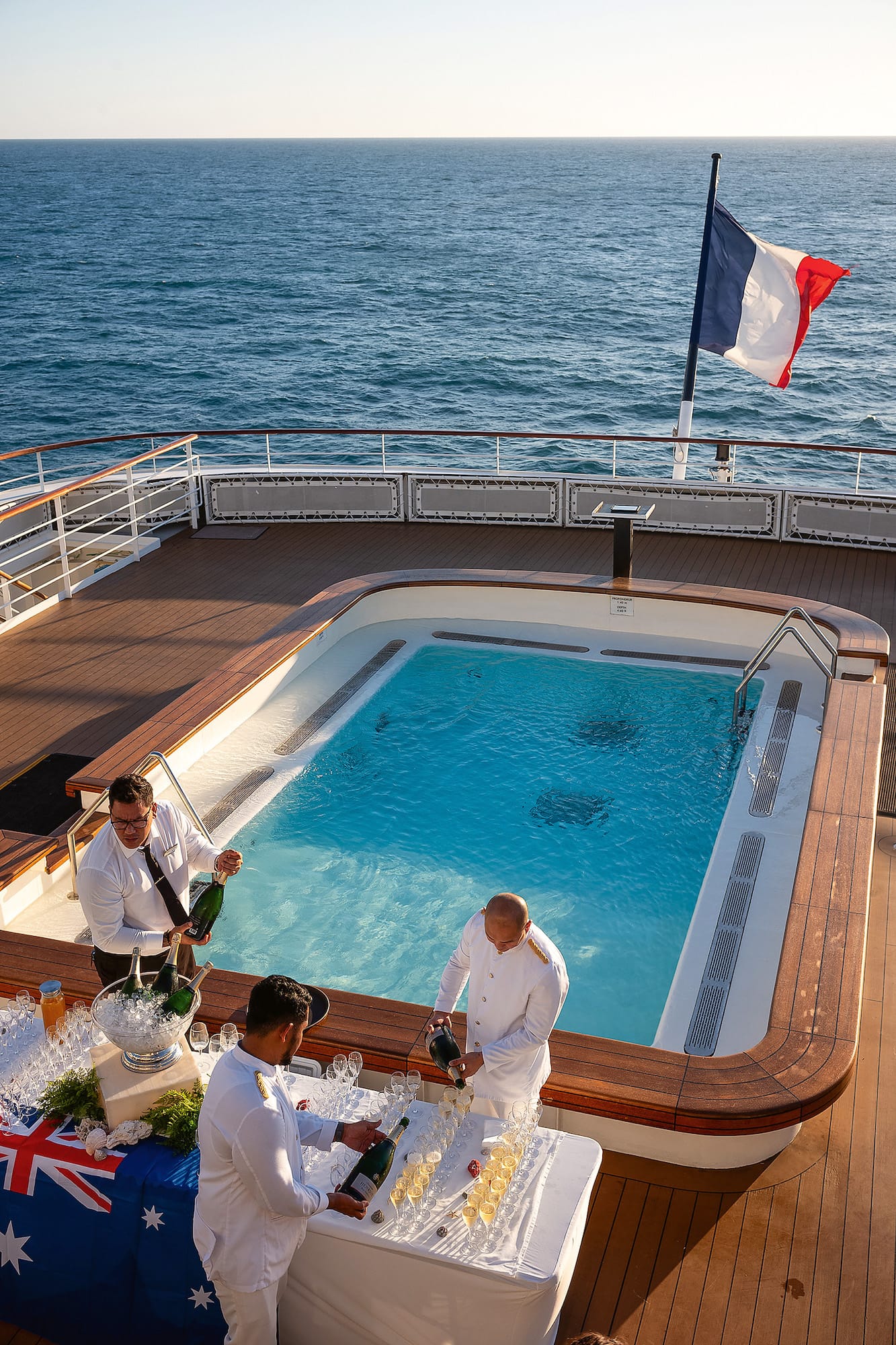
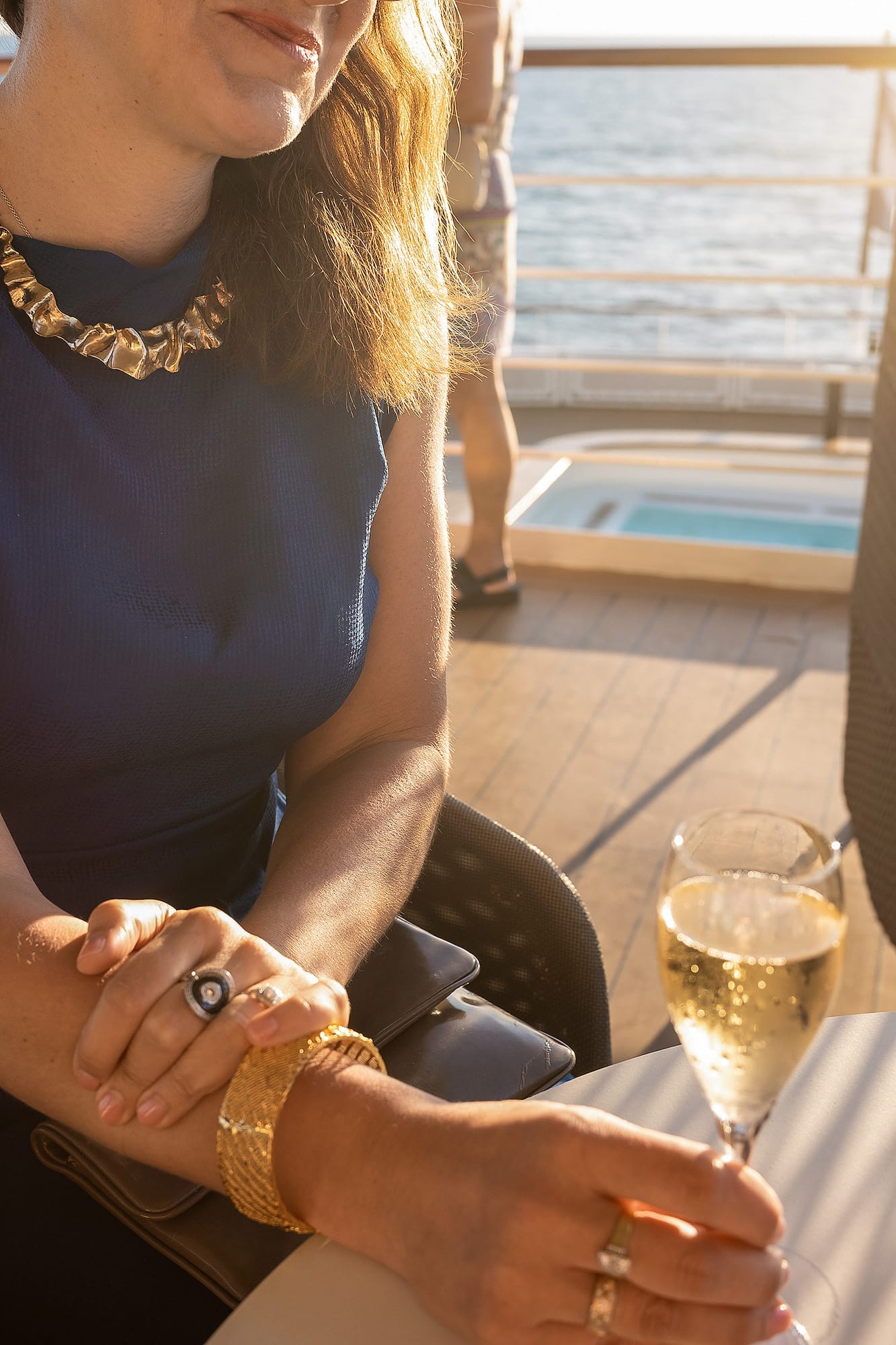
On board Ponant’s Le Soléal, from Darwin to Broome, life was all white tablecloths, champagne and long dinners at sea, as the ship moved slowly along the Kimberley coast.
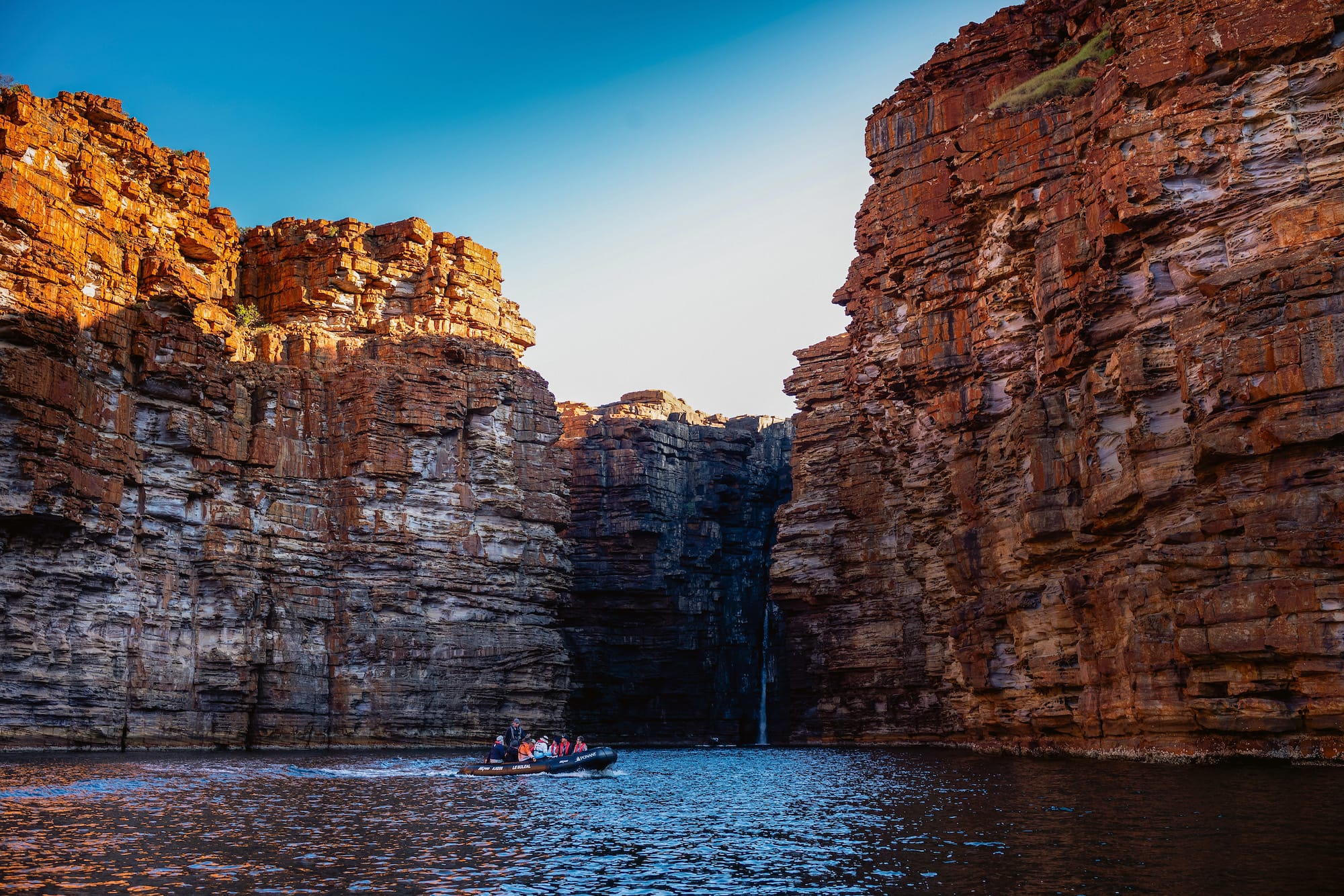
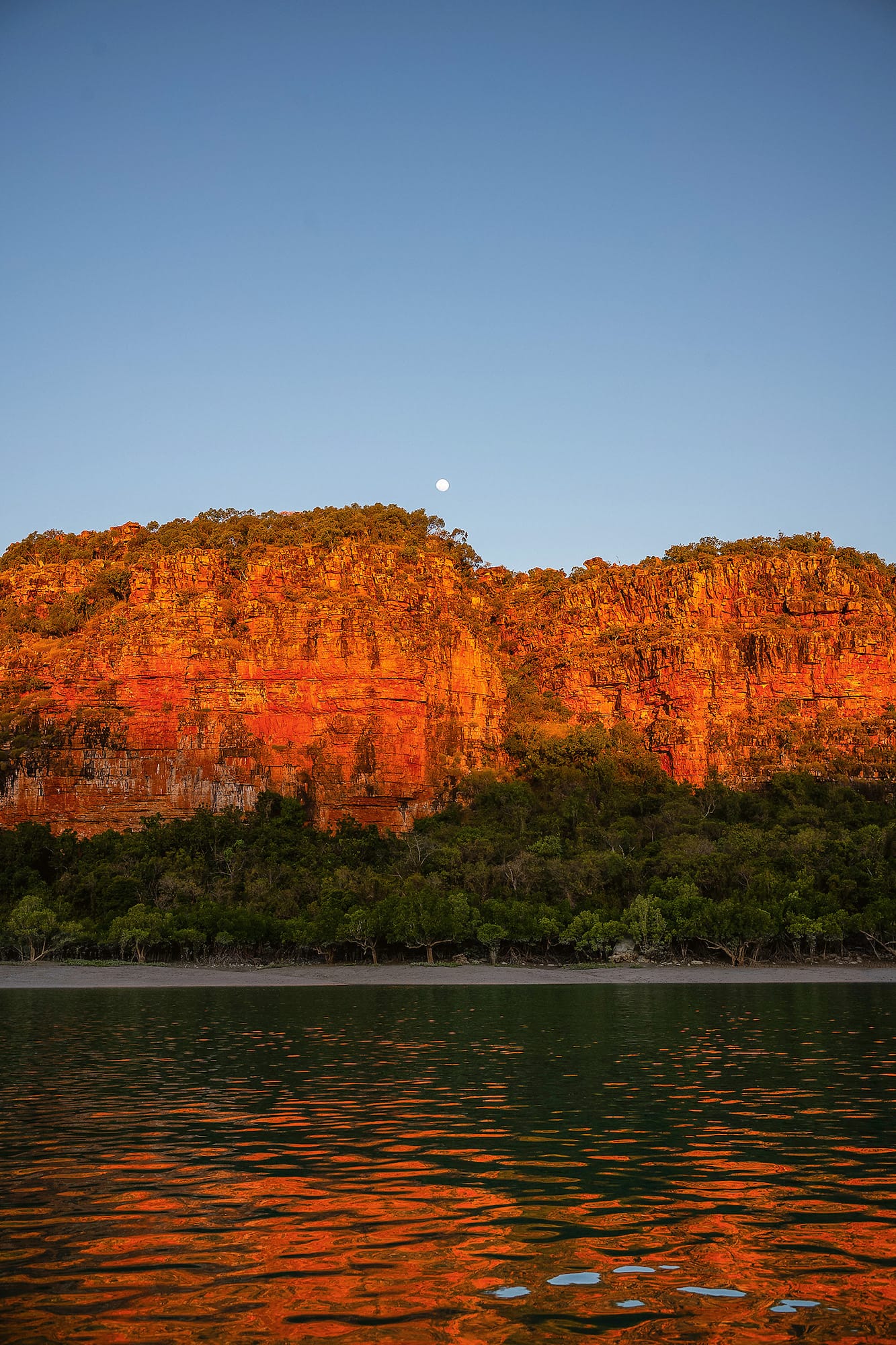
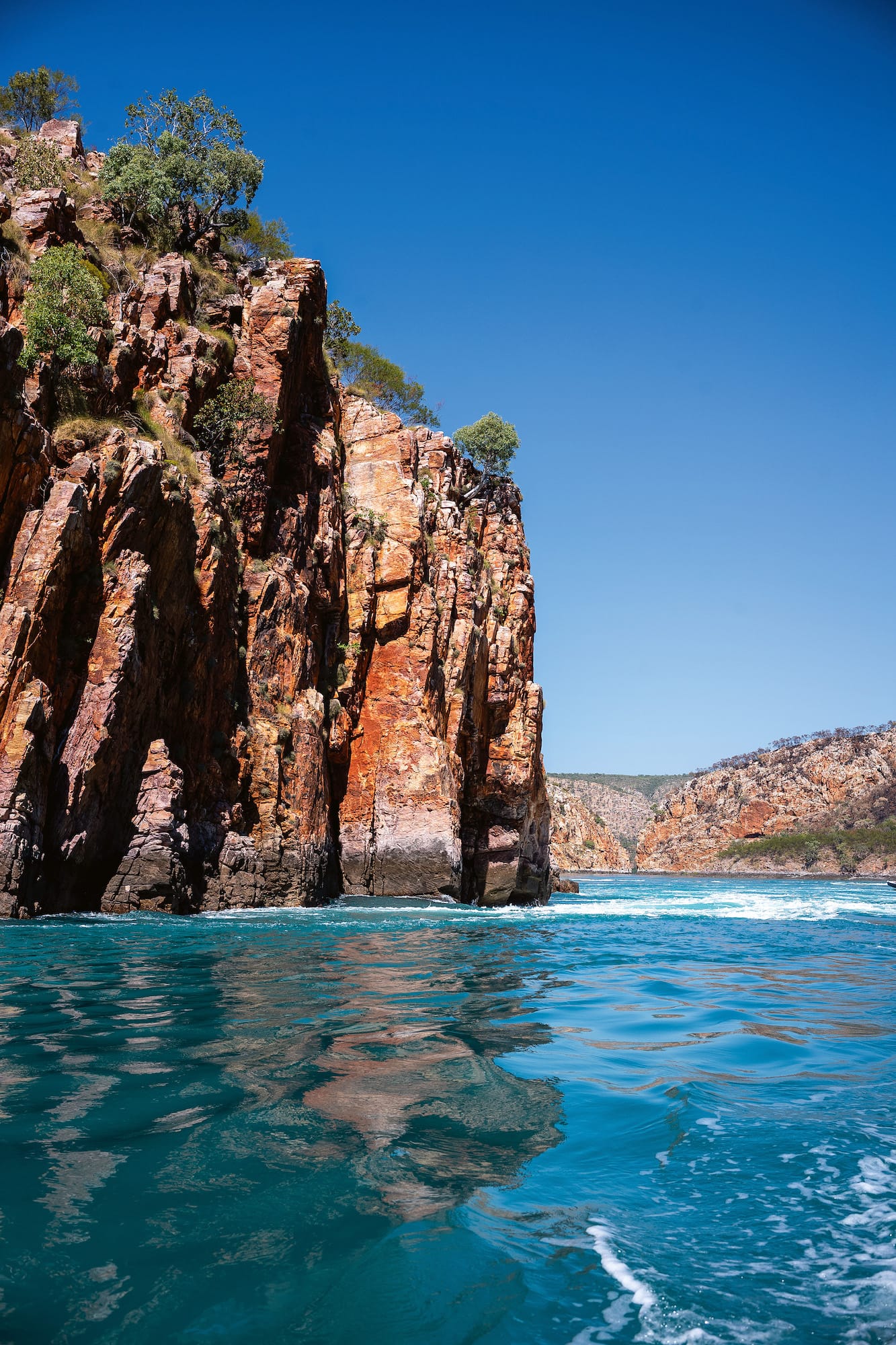
Today we hopped on a Zodiac (you know those black inflatable boats movie villains get around in) and fanged up the huge King George River, which is flanked by red and orange sandstone cliffs that are 1.8 billion years old. These cliffs were formed before the dinosaurs, before any animals at all.
If you shrink Earth’s entire history (4.5 billion years) into one calendar year, this sandstone gorge was formed around May. Dinosaurs would have arrived on the scene on 12 December, and become extinct on 25 December. Humans don’t even show up until 31 December at 11.59pm. Doesn’t that fry your mind?
There are saltwater crocodiles in the water here. The crocs used to be skittish and would keep their distance, our expedition leader told us, but after David Attenborough raved about the Kimberley, lots of people started coming. Some of them threw fish heads off their boats and now the crocs see the boats as a source of food. So they’re less skittish. I’m keeping my hands well inside the Zodiac.
Another thing about saltwater crocodiles: they can swim up to 30 kilometres an hour. You’ve got no chance of out-swimming one. They’ve also got the strongest recorded bite force of any animal which, at 3000 psi, is like having a hydraulic press stronger than a car crusher built into their jaws.
~
We met Ingrid, a beautiful woman in her 60s. She’s here with her husband, Scott. It’s their first cruise. They both have sparkly eyes.
“You have to stay curious,” she said. “And relevant.” They are also fit.
There are a few couples on the ship where one half is visibly in better health (mental or physical) than the other. It’s really moving to see the tenderness between them.
On the first night in the dining room, a man Ingrid didn’t know sat next to her. “You are my wife,” he said. “No, I’m not,” she answered. And then his actual wife, also with blonde hair but 20 years older, said: “Come over here, darling.”
~
For days now, from the ship looking out towards the coastline, I have not seen a single road, building or human being. The remoteness is staggering. If you liken cities and towns to the stars in the sky, and the lines you draw between the stars as the roads and the highways, then the Kimberley is like the Dark Emu, shaped not by the cities and highways, but the absence of them.
It’s taken me a while to sink into the nothingness. But now that I’ve slowed down a bit, I’m starting to see that it’s not nothing at all. This place is teeming with life.
Crocodiles, dolphins, sea turtles and humpback whales in the water. Sea eagles and egrets above. Shorebirds and crabs and tiny rock wallabies in front of us, with spinifex grass and beautiful pale purple mulla mulla flowers waving in the breeze. And towering above and around us, the ancient geology, where tectonic plates crunched together into vertical sandstone layers that now thrust from the aquamarine ocean. I’ve put my phone on silent. Doesn’t seem right to have phone sounds out here.
~
We’ve become friendly with a couple in their 70s from Sydney: Annette and Peter. They met when they were 16, when $2 could buy nine schooners and a hamburger. “Everything was 20 cents,” said Peter. They radiate warmth. Sometimes when you’ve been in a relationship a long time, minor grievances layer on top of each other, hardening into sedimentary rocks of resentment and bitterness. Not these two.
I asked Annette what advice she would give to her 45-year-old self, knowing what she knows now. She said, “Keep your family close. And put money in your superannuation.” That’s as good advice as I’ve ever heard.
~
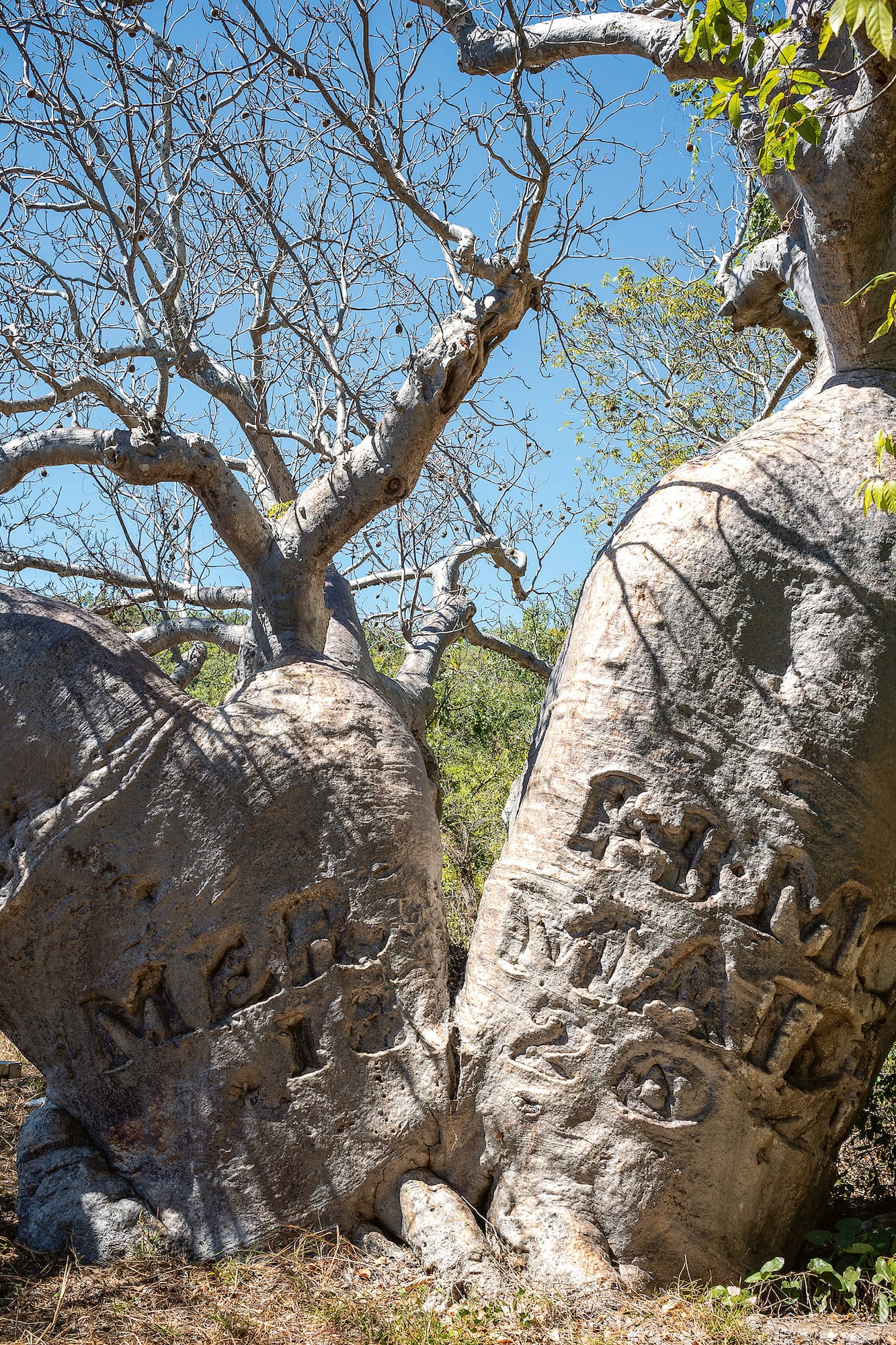
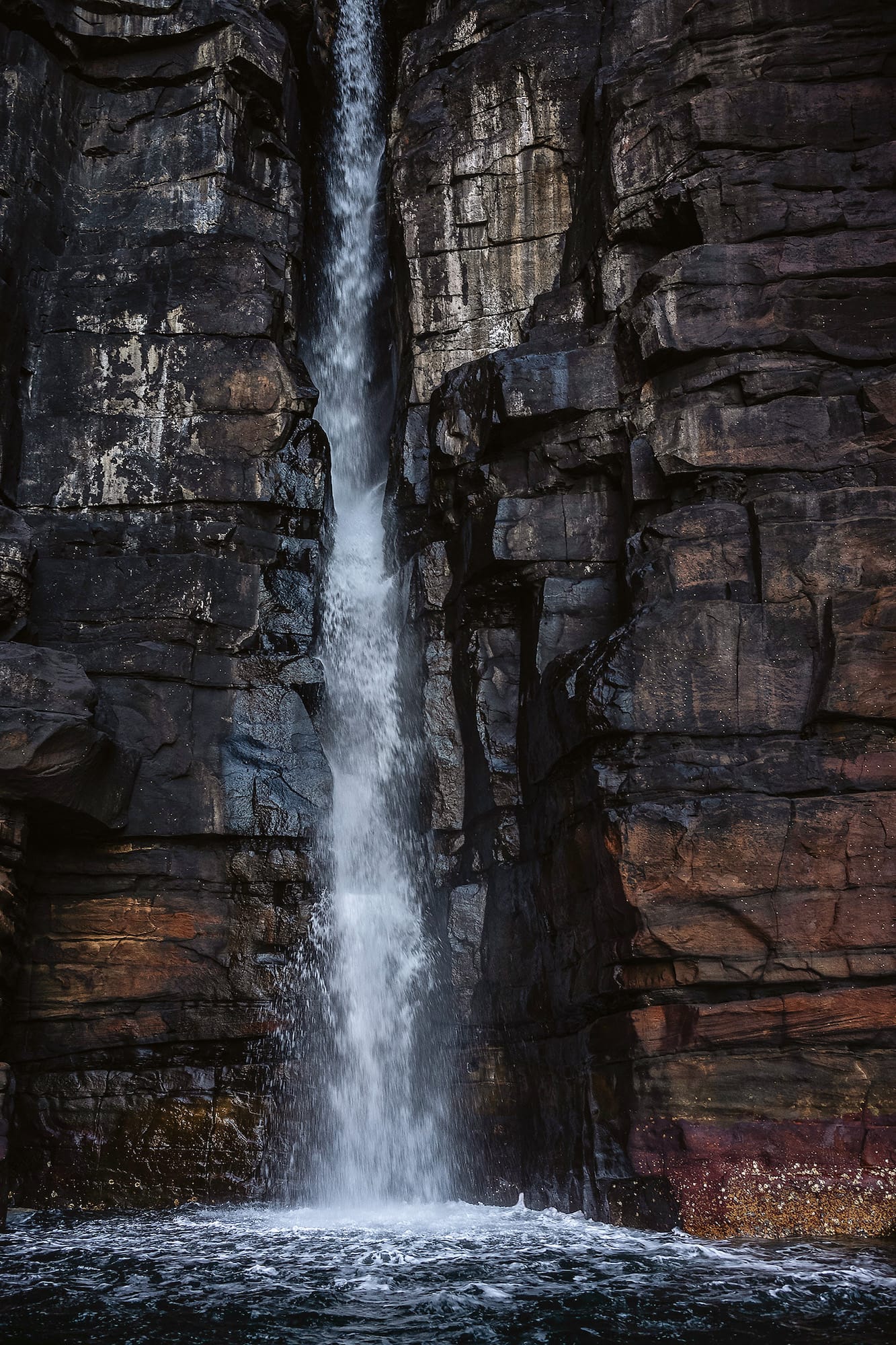
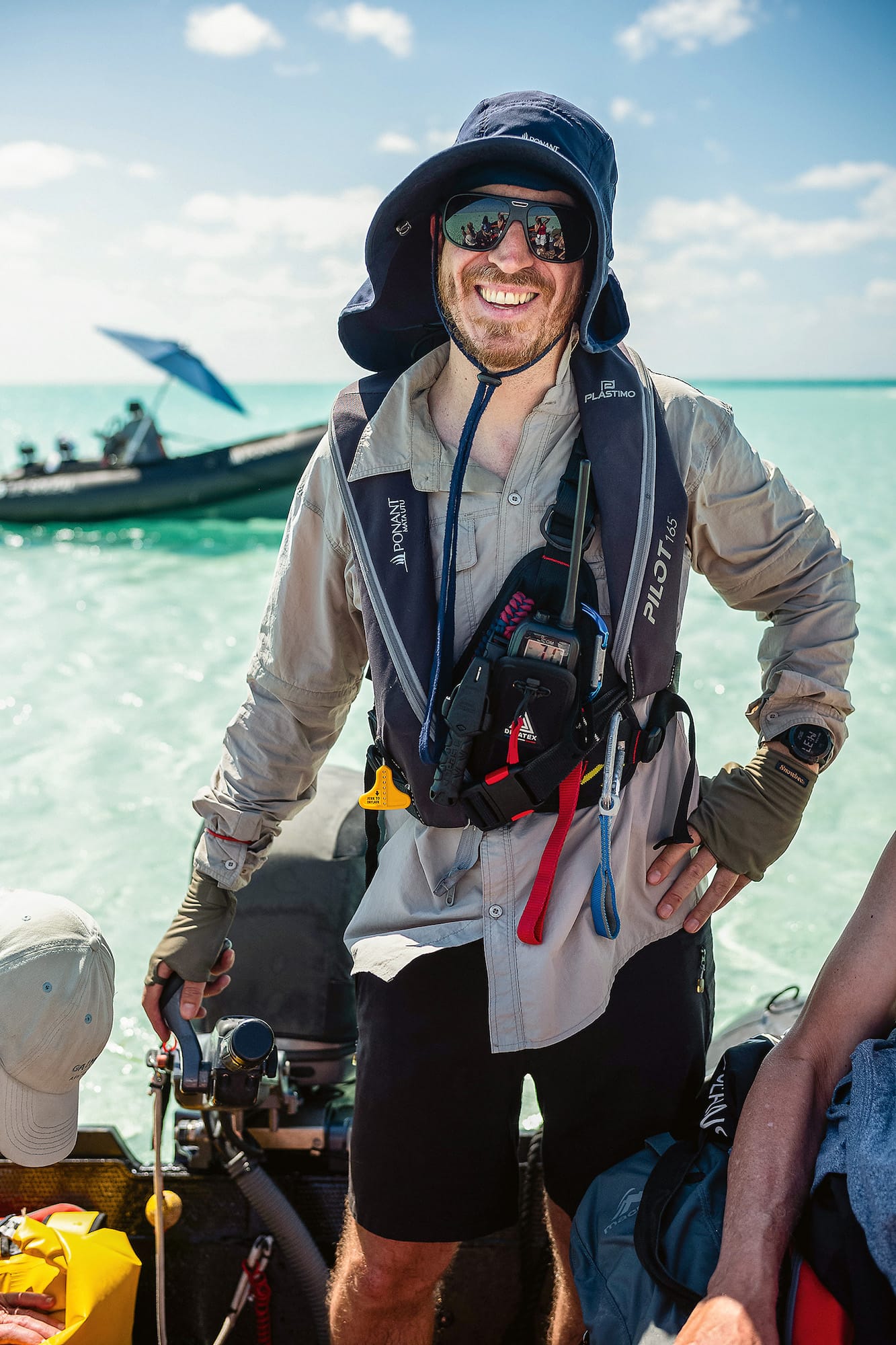
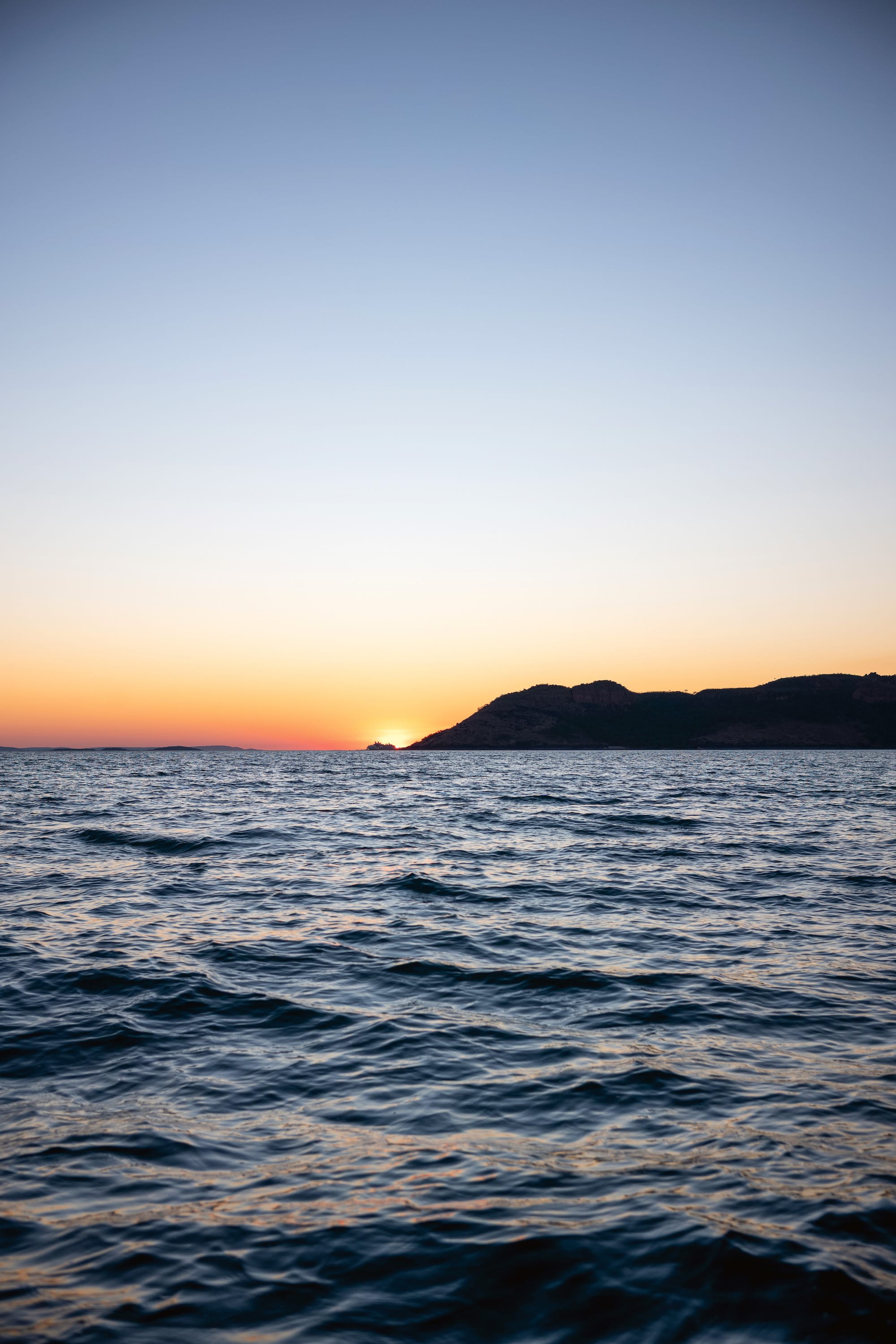
Each day, we head out on a Zodiac to explore a magnificent river or a reef or an island with one of the ship’s expedition guides, an international group of about 15 scientists, biologists and adventurers.
I have two favourite guides: Alex Fellous, who has a PhD in something to do with intergenerational trauma in molluscs, who swapped the politics of French academia for a life in French Polynesia. The other is Laurent Lavolé, a New Caledonian linguist with a special interest in Japan and sharks. Both are photographers. I can’t quite believe how lucky we are to be exploring the Kimberley with people like them. Like when you’re in a taxi and you find out the driver was a brain surgeon back in Iraq.
They’re really good at pointing out the main events – the crocs, the breeching whales, the sea turtles – “Look there, in the distance, at 11 o’clock” – but also they bring smaller things into focus, like the miniature red crabs on the water’s edge and flapping mudskippers and tiny shorebirds.
I thought I might fall back in love with taking photos this trip, but it has only added to my growing sense of disillusionment.
Helen Garner wrote about going to Antarctica, where she was driven mad by the incessant photographing of her fellow travellers. “Camera mania flourishes ... obliterating all social contact.” I am one of those annoying travellers, reaching for the camera hanging off my neck whenever we see anything beautiful, which is almost always. I’m some kind of perpetual content-monster without an off switch.
Perhaps I could go out tomorrow without my camera and just look with my eyes. This makes me feel immediately anxious.
~
We visited an island with ancient ochre art painted on the rock walls between 12,000 and 17,000 years ago. No-one knows how many more rock art paintings there are throughout the Kimberley, an area roughly the size of the United Kingdom, much of it remote and hard to get to. The oldest drawings we see today show elongated human figures decorated with bags, tassels and fancy headdresses, so much more intricate than I imagined, as well as animals such as snakes and echidnas.
To work out how old the drawings were, scientists looked at old wasp nests that had formed over the art. They carbon-dated them and then, because the nests were on top of the paintings, they knew the paintings had to be older than the nests. There are probably a few more steps to the dating-ancient-art process, but you get the gist.
In the Zodiac with us was John, 81, from Sydney, who is travelling by himself. Someone asked him where his wife was and he replied, “I don’t have a wife.”
I’ve become his personal photographer and, after each outing, I AirDrop him photos to put on his family WhatsApp chat. “Where’s Annabelle?” he bellows when he’s off the Zodiac and back on the main deck.
I asked John what advice he would give to his younger self. “Get a good self-managed super fund” – the importance of super is a recurring theme on the good ship Ponant – “and don’t get divorced. It’s too expensive, financially and emotionally.”
~
If you look at a map of Australia, zoom out and look for the Indian Ocean in between the north-west of Australia and Timor-Leste. Well, today we swam somewhere in that vast sea.
There’s a tiny sand island on a reef on the edge of the continental shelf, surrounded by the bluest water and home to dugongs and rays and sea turtles and sharks. No-one (human) lives at Ashmore Reef, unless you count the Australian Border Force boat that’s moored nearby to intercept people smugglers en route from Indonesia to Australia.
Philippa and I floated in that perfect water, grinning like maniacs. After a blissful hour or so, we Zodiaced back to the ship to spend the rest of the afternoon in our cabin with the balcony door open, watching the Indian Ocean pass us by as the ship cruised back towards Australia. We ordered room service and spent hours chatting, writing and scrolling. The movement of the ship created an air of productivity – we were going places – which, along with Philippa next to me, was enough to let me switch off in a way that’s nearly impossible at home.
It’s precious to have a friend for life. Some of the friends that you have now, you might never see again when you’re grown up. But there will be some you’ll hang onto. Or they’ll hang onto you. And over time, the layers of the mostly ordinary moments you share with them, punctuated with jolts of joy and pain, become something as solid and beautiful as those ancient sandstone cliffs out there.
We spent last night on the dance floor with our new friends, dancing to ABBA cover songs. “There are just so many good ABBA songs,” shouted Annette on the dancefloor. By the end of the night, we were all flushed and beaming from the dancing and the cocktails. I think all of us felt young. I don’t dance enough at home.
~
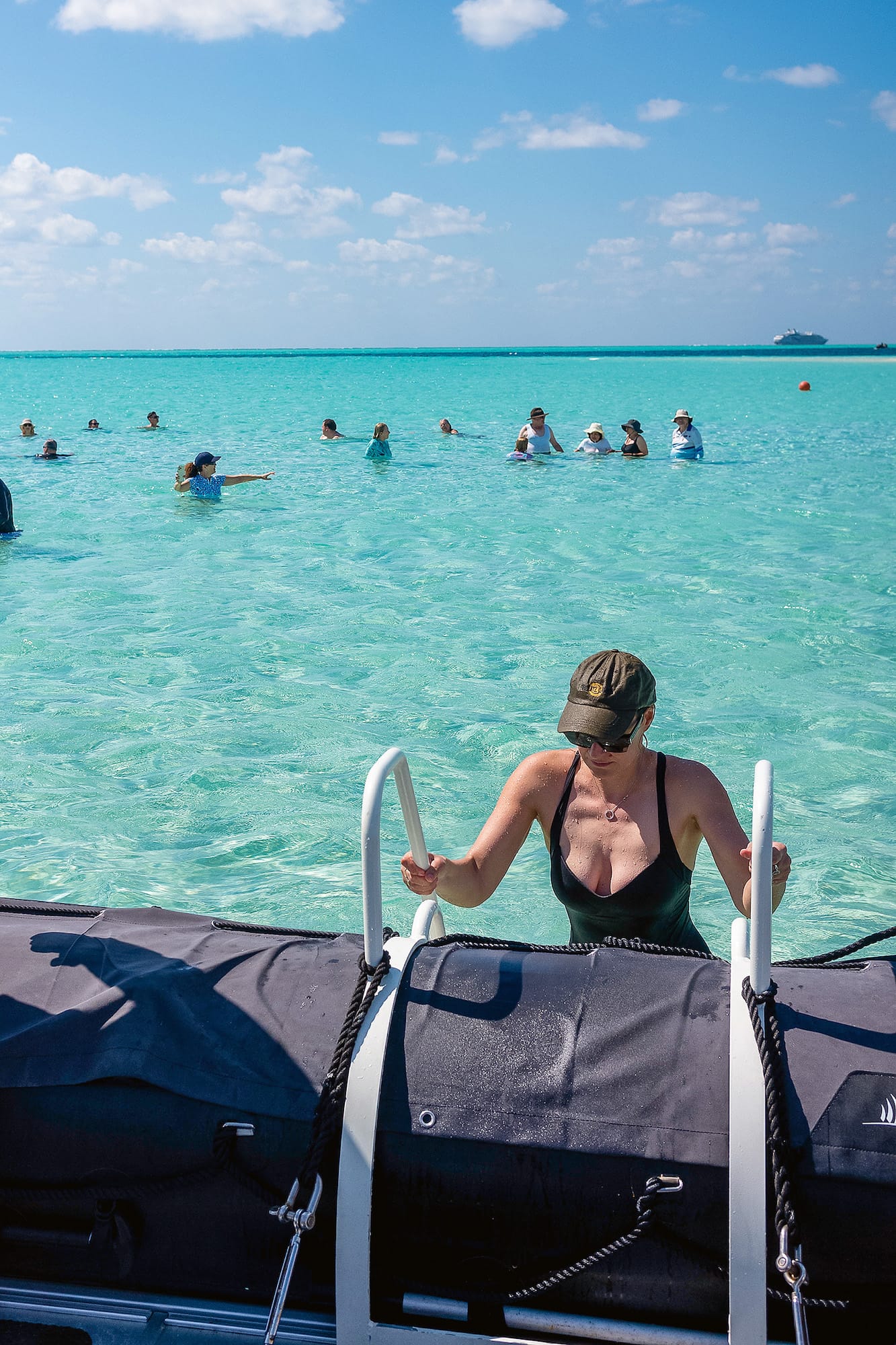
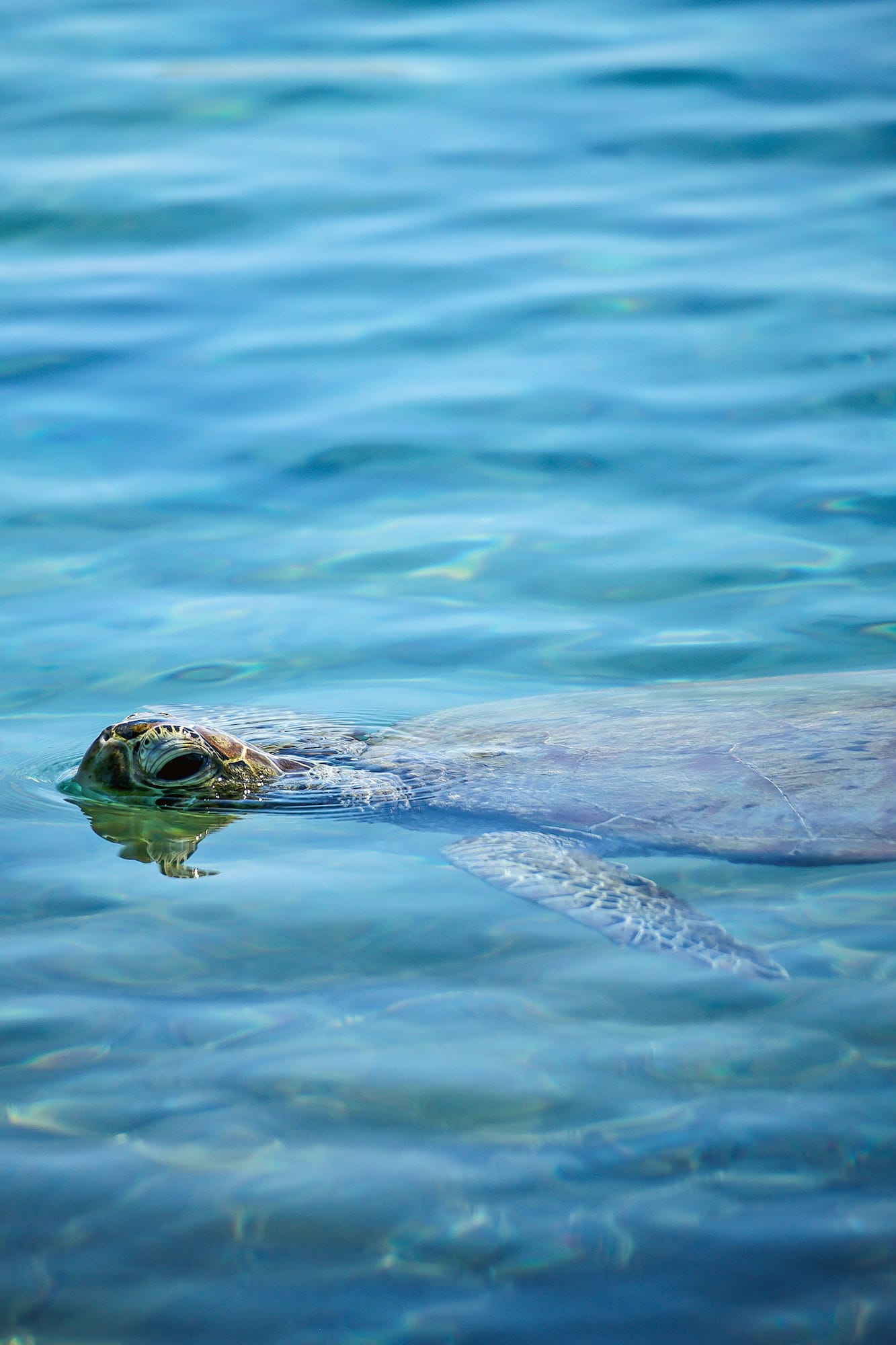
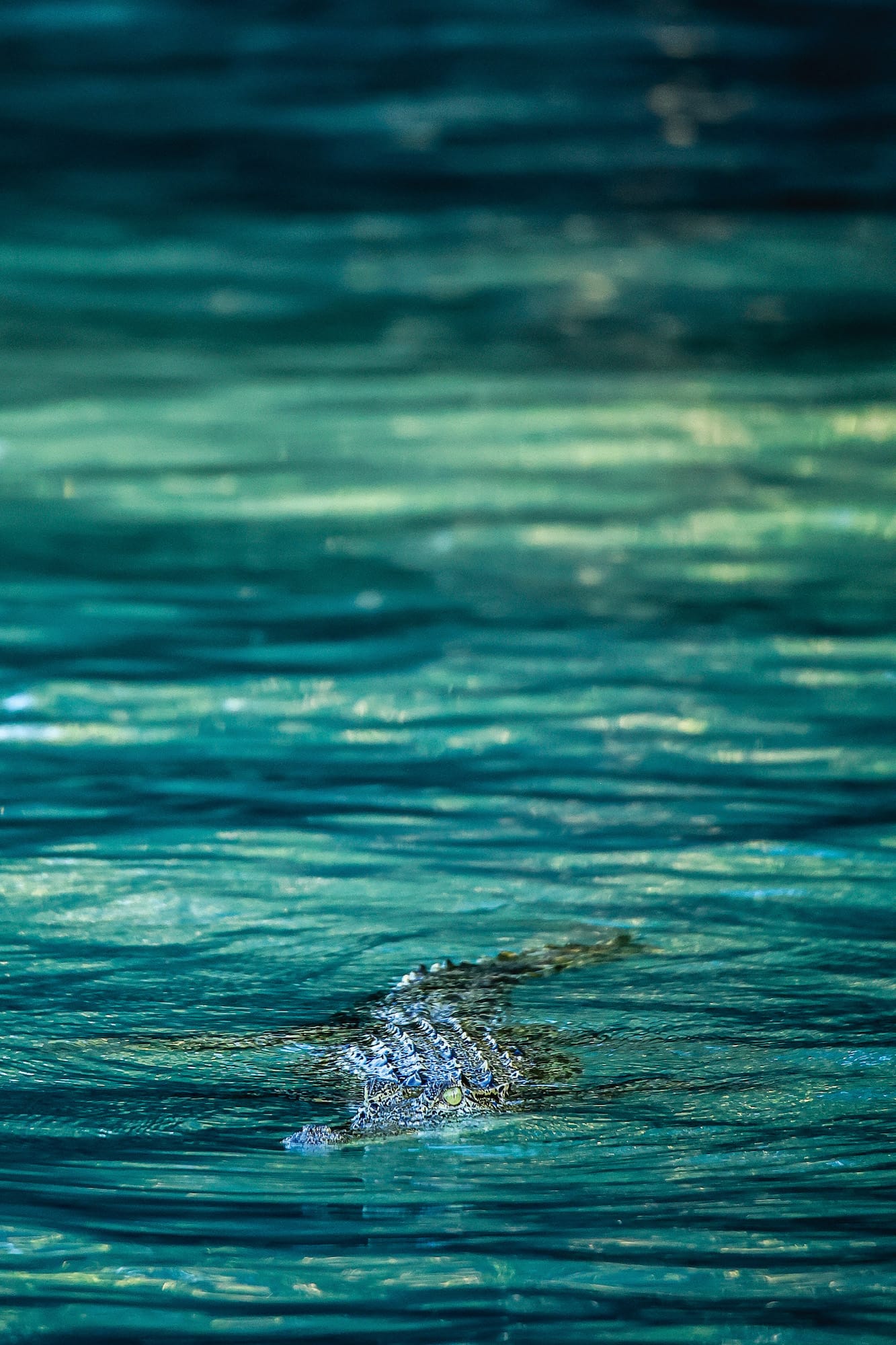
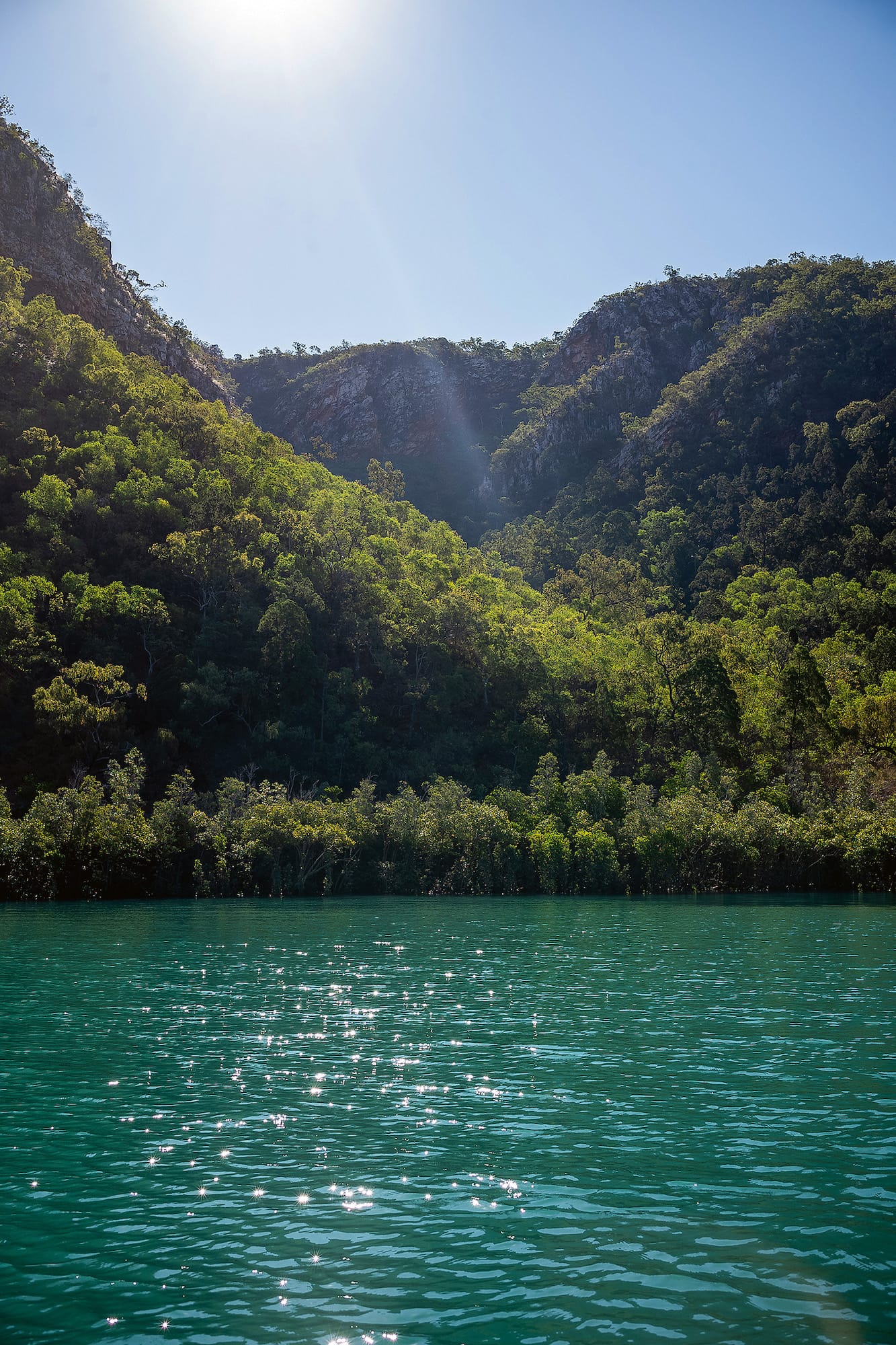
Swimming at Ashmore Reef, 600 kilometres north of Broome on the edge of the continental shelf, home to dugongs, rays and sea turtles; a green sea turtle; a saltwater crocodile; Collier Bay’s rainforest pockets.
We went croc hunting with Alex in the Hunter River today. Not hunting to kill – crocs are protected in Australia and, as a result, their numbers and reach are increasing – but hunting to see. And there were crocs everywhere. On the muddy banks of the mangroves, but also in the ocean swimming right next to us. Huge and magnificent and totally frightening. I felt on edge, sitting in what was essentially an inflatable dinghy, but Philippa couldn’t get enough of being so close to them.
It’s funny how people react differently to seeing wild animals. It was the crocs for Philippa, but for me it was the whales. One evening, a group of five or so humpback whales swam right up next to the ship, cruising alongside for more than an hour. The awe of watching their fins, then their tails, and then hearing their giant gasps of air cracked me wide open. Thank god I didn’t have my camera to ruin it.
We had a great night hanging out with a couple, Zoe and Ash, from Coffs Harbour last night, staying up and being silly in the piano bar until 2am (which as you know is about five hours after my normal bedtime). We laughed and laughed and laughed. Far out, it felt good.
We’d been kind of nodding at each other but it wasn’t until last night that we chatted properly.
This is the thing with being in a confined space with a group of strangers. Some of the people will drive you wild by showing you unsolicited photos of their cat while you’re mid-chat with someone else about something that has nothing to do with cats. But that’s the price you pay for getting to meet the others. It’s like a small country town in that way.
~
Philippa was the first person at the buffet for lunch today. Each day, we’ve started lunch earlier and earlier. I guess we’ve reached the pinnacle now.
There are two places to eat on the ship. The aforementioned buffet on level six with tables set up on the deck looking out to the bright ocean. And level two, a more formal “inside” restaurant, with white ironed tablecloths and five-course menus. And wine. Actually, there is wine everywhere.
~
We went to visit the Horizontal Falls on the Zodiac today. This natural phenomenon is created by massive tidal movements rushing through two narrow gorges in Talbot Bay, 250 kilometres from Broome. The Kimberley coast has Australia’s highest tides, up to 10 metres between low and high. While not technically waterfalls, the rushing tide creates a dramatic height difference between either side, with water changing direction as the tide turns.
David Attenborough called the Horizontal Falls one of the greatest natural wonders of the world. They didn’t make quite the same impression on a woman in our group. On the way back to the ship, after we had Zodiaced right up to one of the narrow gaps where it all happens, she asked when we were going to see the falls. Our guide said, “We literally just did.”
“Oh,” she said.
~
I left my camera on the ship today as we headed out on the Zodiac to explore Montgomery Reef. I felt properly alive. We saw lots of green sea turtles, raising their heads ever so briefly before diving deep again. Instead of worrying about getting the shot, I just enjoyed them.
Sea turtles can remember where they were born, even though they spend only a short time as hatchlings at that spot. Their mother lays a nest of 100–200 eggs in a hole she digs above the high tide line on a beach. When the little turtles crack out of their eggs, they immediately scurry down the sand into the water – literally running for their lives – and then spend decades at sea. This chapter of their life is called “the lost years”, something I can relate to.
When they’re ready to have their own babies, the sea turtles make their way right back to where they were born, riding the thermal current from whatever far-flung place they have drifted off to. Somehow, they use the Earth’s magnetic field to orientate themselves. Our guide said, “They might not know where exactly they are, but they know if they’re on the right track.”
After almost 10 days on this ship, my body is relating to the Earth’s magnetic field in a way that’s pointing me towards home. Today, we’ll sail through Lacepede Islands, with their white sands, turtle-filled lagoons and millions of birds, and make our way to Broome. After an incredible time on this ship, the right track for me is to hop on a plane towards you.
The writer travelled as a guest of Ponant. Ponant Explorations offers French, small-ship luxury on all-inclusive Kimberley voyages from May to September. au.ponant.com
